

 Get Estimate
Date: 30-June-2025 | By: Pestofix Team
When the monsoon hits, most homeowners brace for leaks and damp walls—but few realize they’re also inviting a far worse problem: rats. The rainy season transforms urban areas into a breeding ground for rodents, pushing them out of their flooded burrows and straight into your kitchen, attic, and bathroom ducts.

At Pestofix, we’ve documented a sharp spike in rat infestations every monsoon. Let’s uncover why this happens, how rats sneak in, and what it takes to keep them out for good.
Where Do the Rats Come From During Monsoon?
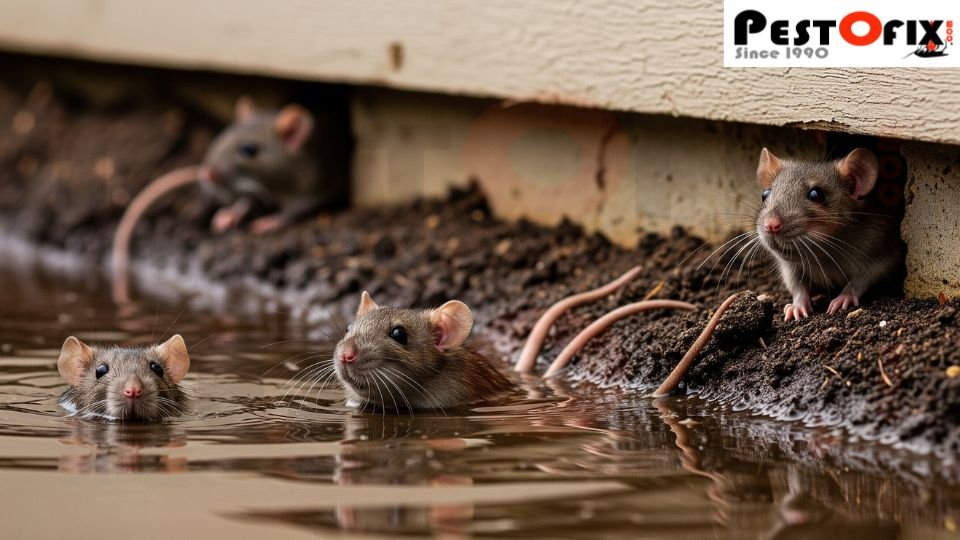
As rainwater fills outdoor rat burrows, rodents are forced to flee and invade nearby homes in search of dry shelter and food.
- Flooded hiding spots: Monsoon water floods rat nests in sewers, empty plots, and garbage zones, forcing them to migrate indoors.
- Food shortages: Rain disrupts their normal feeding patterns outdoors, making your home’s kitchen their next best option.
- Structural entry points: Cracks, holes near pipes, and open drains become rat highways during rainy nights.
Why Flooded Rats Choose Your Home as Their Shelter
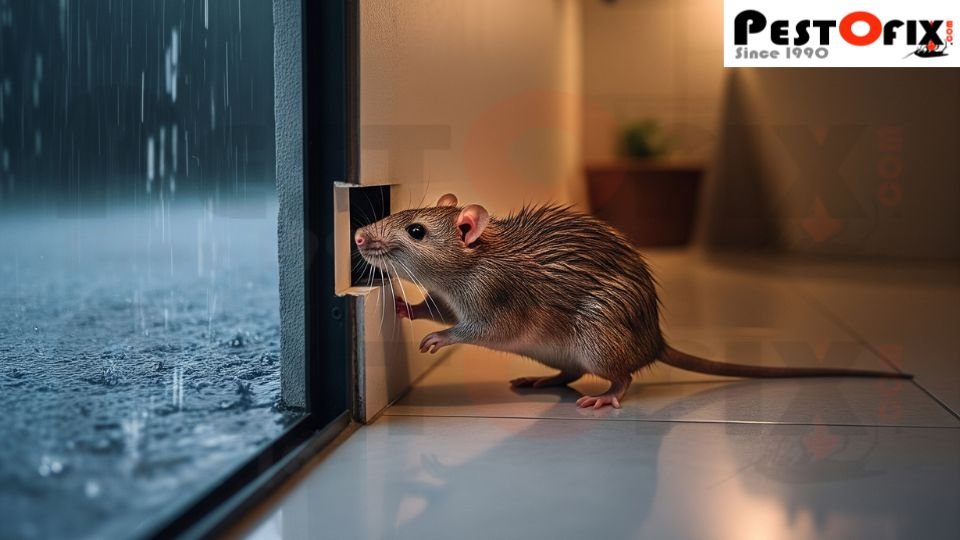
Driven by survival, rats invade homes during monsoon by slipping through tiny openings like bathroom drains, door gaps, or AC ducts.
- Flooded nests: Sewer lines, garbage mounds, and soil tunnels get waterlogged during monsoon, forcing rats to flee.
- Dry interiors: Indoor areas behind furniture, cabinets, and false ceilings offer dry, undisturbed nesting spaces.
- Survival instinct: Rats are drawn to warmth, food smells, and darkness—your home checks all three boxes during storms.
- Hidden access routes: They exploit small gaps in bathroom pipes, utility ducts, or loose drain covers to slip inside unnoticed.
Hidden Pathways: How Rats Enter Without Being Seen
- Kitchen sink drains and under-slab plumbing ducts
- AC pipelines, roof cracks, and damaged ventilators
- Electrical cable conduits and false ceilings
- Lift shafts and duct spaces in apartment buildings

The Hidden Dangers of Ignoring a Monsoon Rat Infestation
- Electrical fires: Rats gnaw wires, causing short circuits and potential fire hazards.
- Disease spread: Leptospirosis, hantavirus, and salmonella are all rat-borne illnesses that spike during the rainy season.
- Contamination: Rats leave urine, feces, and fur in food storage areas, posing major hygiene threats.
Why DIY Rat Solutions Don’t Work in Monsoon
- Multiple nests: Rats create complex networks of nests and escape paths that traps can't reach.
- Resistant behavior: Monsoon rats are extra aggressive and bold—traps alone are ineffective.
- Breeding explosion: A single pair can produce dozens of offspring in weeks if not handled properly.
Monsoon isn’t just about rain—it’s a red alert for rodent intrusion. If you’ve spotted even one rat, the colony is likely much larger and hidden. Trust Pestofix to stop the infestation before it spirals out of control.
Related Keywords: rats in monsoon, rodent infestation rainy season, rat control service monsoon, why rats come inside during rain, Pestofix rat treatment, rainy season pest problem