

 Get Estimate
Date: 12-November-2025 | By: Pestofix Team
Kitchens and residential spaces are the most common targets for rats seeking warmth and food — especially during the winter months in Delhi NCR. These rodents can enter through tiny openings, contaminate food supplies, and cause damage to electrical wiring and stored goods.

Understanding how rats behave and where they hide is the first step toward effective prevention. This guide explains the common causes of infestations and practical steps to keep your kitchen and home safe, clean, and pest.
Why Rats Target Kitchens and Homes
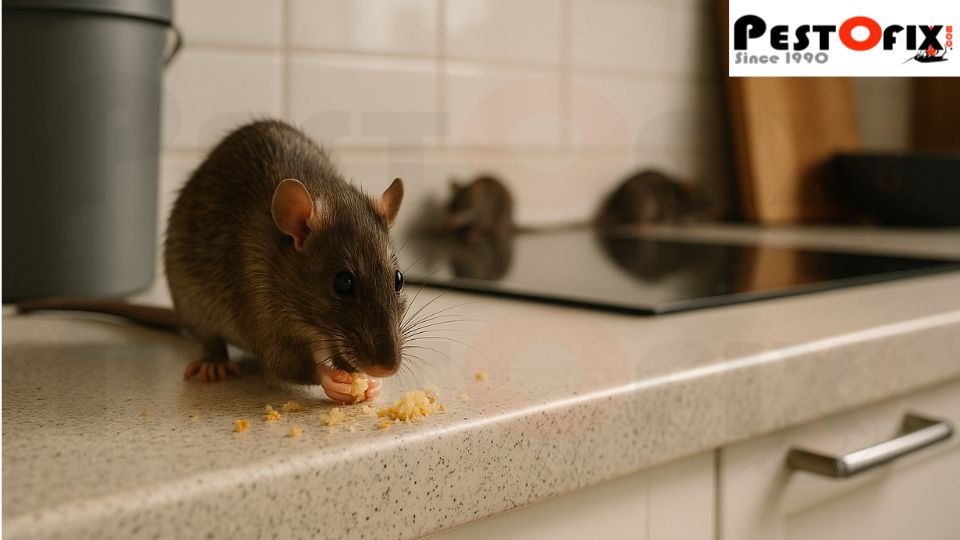
Kitchens provide everything rats need — food, shelter, and warmth. Once inside, they can quickly multiply and contaminate surfaces with harmful bacteria and droppings. In apartment complexes and residential societies, rats easily move through drainage lines and wall cavities, spreading fast between units.
- Food sources: Open bins, leftover food, and spilled grains invite rodents instantly.
- Shelter and warmth: Cluttered storage, unused corners, and false ceilings become ideal nesting spots.
- Entry points: Gaps under doors, plumbing holes, and ventilation ducts act as easy access routes.
Early Signs of Rat Infestation

Spotting a single rat often means there are more nearby. Early detection helps prevent major infestations and property damage. Watch out for these warning signs in kitchens, basements, and storage rooms.
- Scratching or scurrying sounds behind walls or cabinets.
- Small droppings near food storage, bins, or sink areas.
- Gnaw marks on wires, packaging, and wooden furniture.
- Strong musky odor in enclosed areas or false ceilings.
Effective Prevention Tips for Rat Control
Prevention is the most effective and eco-friendly way to control rat infestations. Here’s how to protect your kitchen and home:
- Seal entry points: Close all wall cracks, pipe openings, and door gaps.
- Maintain hygiene: Clean food spills immediately and store dry items in sealed containers.
- Secure waste bins: Use covered bins and dispose of garbage daily.
- Reduce clutter: Keep storage organized and avoid unused cardboard piles.
Consistent hygiene and routine inspection can help stop rodent activity before it becomes a larger infestation.
Professional Help for Persistent Rat Problems

If rat sightings or droppings continue despite preventive efforts, it’s time to call professionals. Certified pest experts conduct thorough inspections, identify nesting zones, and apply safe, approved control methods suited for residential environments.
Professional services ensure long-term protection using humane, eco-safe, and odorless techniques — suitable for both kitchens and residential spaces.
Frequently Asked Questions
1. How do rats enter homes in Delhi NCR?
Through open drainage lines, unsealed pipe gaps, small wall cracks, and broken ventilation covers.
2. Are chemical rat control methods safe for kitchens?
Professional pest control companies use odorless, eco-safe methods that comply with WHO and BIS standards for food-handling areas.
3. How often should homes be inspected for rodents?
At least once every 3–4 months, especially before and during the winter season when rodent activity peaks.
4. Can rats cause electrical damage?
Yes, they chew wires and insulation, which can lead to short circuits and fire risks.
5. What should I do if I see a rat in my kitchen?
Seal entry points, remove food sources, and contact a certified pest control expert for inspection and safe treatment.