

 Get Estimate
Date: 22-December-2025 | By: Pestofix Termite Control Experts
Delayed termite treatment is rarely a conscious decision. In most cases, it begins with uncertainty — no visible damage, no daily sightings, no immediate reason to worry.
Unfortunately, termites do not wait for visible signs. When termites are left untreated, internal damage continues quietly until the problem can no longer be ignored.
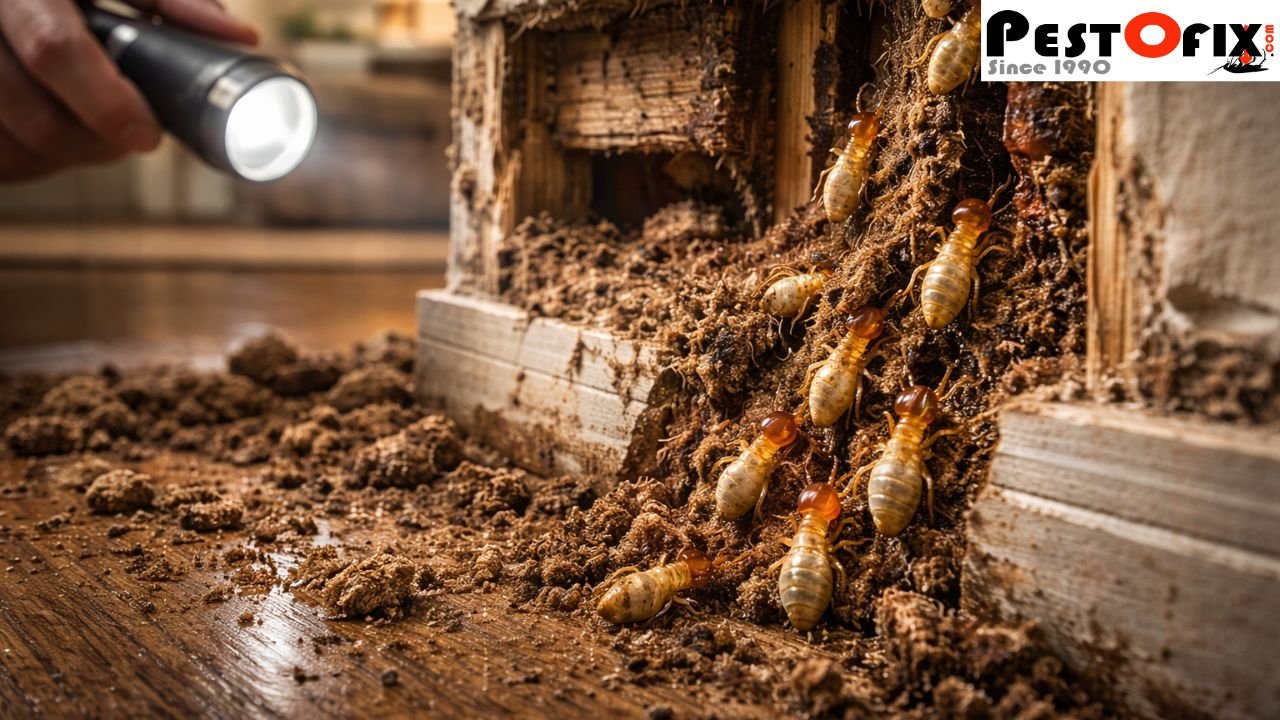
When termites are ignored, the first changes occur out of sight. Wooden supports, door frames, cabinets, and concealed flooring begin losing strength internally.
- Internal wood becomes hollow and brittle
- Damage spreads across connected areas
- No surface warning appears initially
- Structural strength reduces gradually
By the time homeowners notice symptoms, the infestation is usually well established.
How Time Works Against You in Untreated Termite Infestations
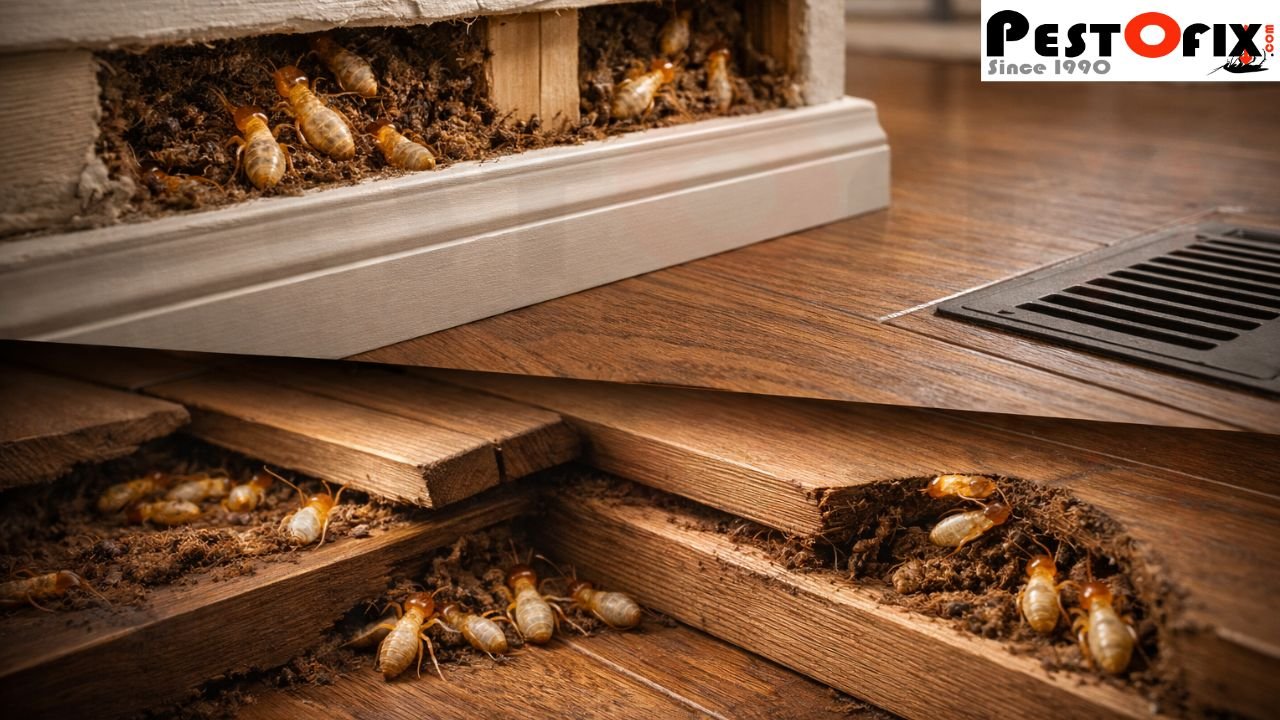
Termites multiply and expand as long as conditions remain favourable. Delay allows them to strengthen their presence across multiple zones of the property.
- Multiple feeding zones develop
- Infestation spreads beyond the original entry point
- Activity becomes harder to assess later
- Structural impact increases with time
This is why early delay often leads to long-term consequences.
Why Silence After Initial Signs Is Misleading
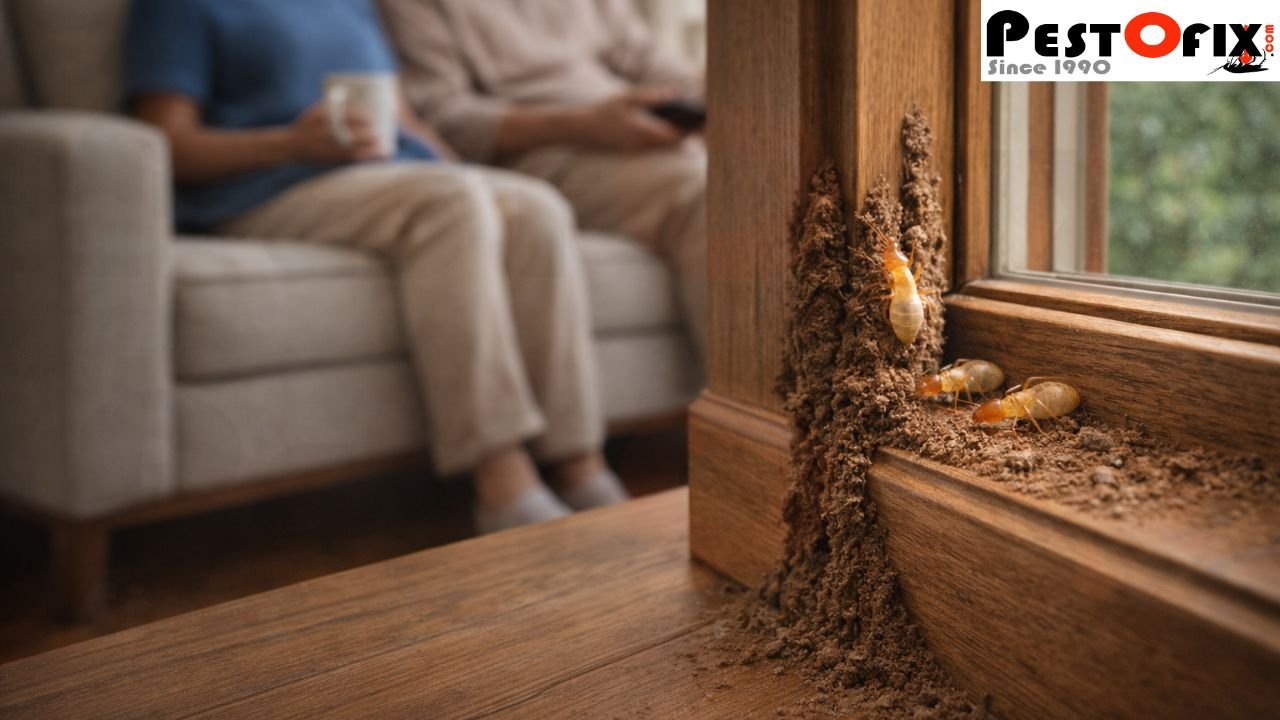
After initial disturbance, termites often retreat deeper into hidden areas. This reduction in visible activity creates a false sense of safety.
- No sightings does not mean elimination
- Feeding continues in concealed spaces
- Damage progresses quietly
- Major signs appear much later
This is one of the most common reasons termite treatment is delayed.
Why Termites Do Not Resolve on Their Own
Termite colonies are designed to survive unnoticed. They do not depend on surface exposure to remain active.
- Colonies remain active without human contact
- Internal populations stay protected
- Environmental conditions continue supporting survival
- Infestation remains stable or grows
Waiting does not reduce the infestation — it allows it to stabilise and expand.
The Stage When Damage Finally Becomes Visible

Crumbling wood, sagging frames, or hollow sounds often appear late. At this stage, the infestation has already caused internal weakening.
- Door frames lose stability
- Cabinet panels weaken
- Flooring may feel uneven
- Repair complexity increases
This is usually when homeowners realise the true impact of delay.
Why Homes Across Delhi NCR Are Vulnerable When Treatment Is Delayed
Residential construction across Delhi NCR commonly includes concealed woodwork, integrated flooring, basements, and shared structural elements. These design features allow termite activity to continue out of sight when treatment is delayed.
- Fixed wooden doors, frames, and cabinetry
- Hidden service ducts and utility shafts
- Foundations with long-term soil contact
- Seasonal moisture variations across the region
When termite activity develops within these concealed areas, infestations can remain undetected for extended periods, increasing the risk of internal structural damage.
Delayed Termite Treatment Is a Structural Risk, Not a Cosmetic Issue
Termites do not disappear without intervention. When left untreated, they continue damaging internal structures until visible failure occurs.
Understanding the consequences of delay allows homeowners to act before damage becomes irreversible.