

 Get Estimate
Date: 21-August-2025 | By: Pestofix Team
If you’ve ever noticed a fine layer of powder-like dust on your wooden furniture, doors, or cupboards, chances are you are dealing with a wood borer infestation — not termites. Unlike termites that silently eat wood from inside, powderpost beetles (wood borers) leave visible powder as they tunnel through wood.
Understanding the difference is critical because misdiagnosing wood powder as termites can delay the right treatment, making the damage worse. In this guide, we’ll break down the real signs of powder borer infestation, the dangers they bring, and the best treatment options available in 2025.
What Exactly is a Powder Borer (Wood Borer)?
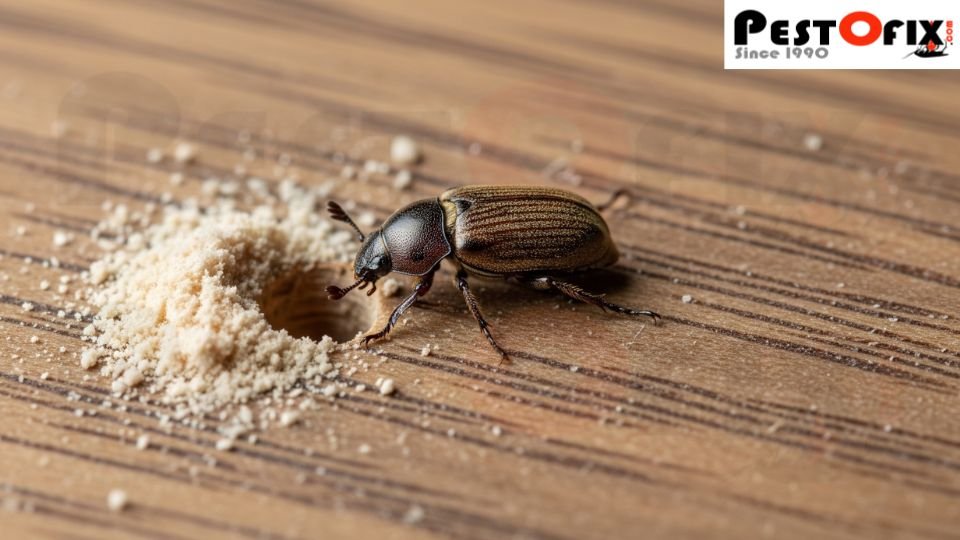
Powder borers are small beetles whose larvae bore into hardwood and softwood, feeding on the inside. When they emerge as adults, they leave behind:
- Fine, talcum-like powder (frass) around wooden furniture.
- Small, round exit holes (1–2 mm diameter) on wood surfaces.
- Weak, hollow-sounding wood that crumbles when pressed.
How to Identify Powder Borer Damage (Not Termites!)
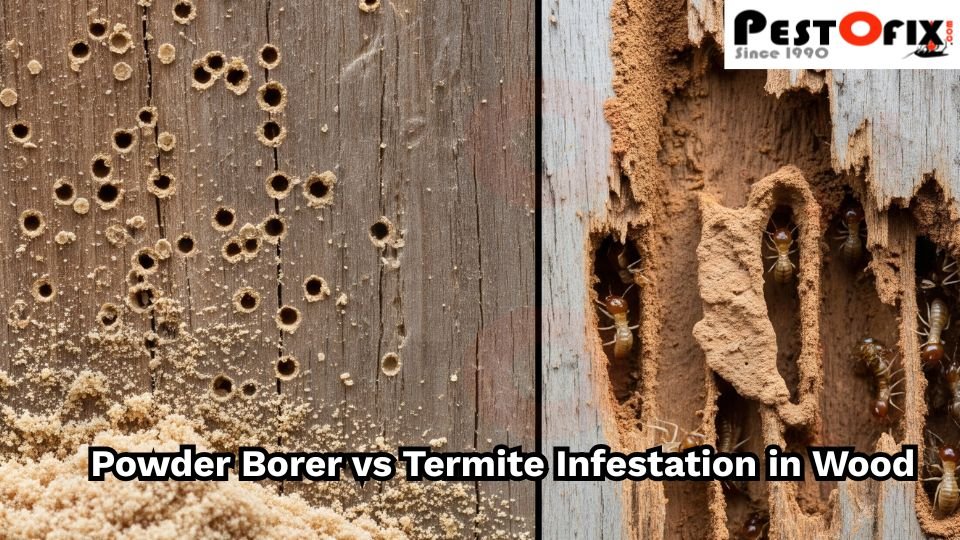
Signs of Powder Borer Infestation
- Fine wood dust collecting near wooden legs, cupboards, or doors.
- Pinhead-sized round holes scattered on surfaces.
- Fresh powder appearing even after daily cleaning.
Difference from Termites
- Powder Borers: Leave visible powder and clean exit holes.
- Termites: Do not leave powder; instead they leave mud tubes and completely hollow wood.
Why DIY Fixes for Powder Borers Rarely Work
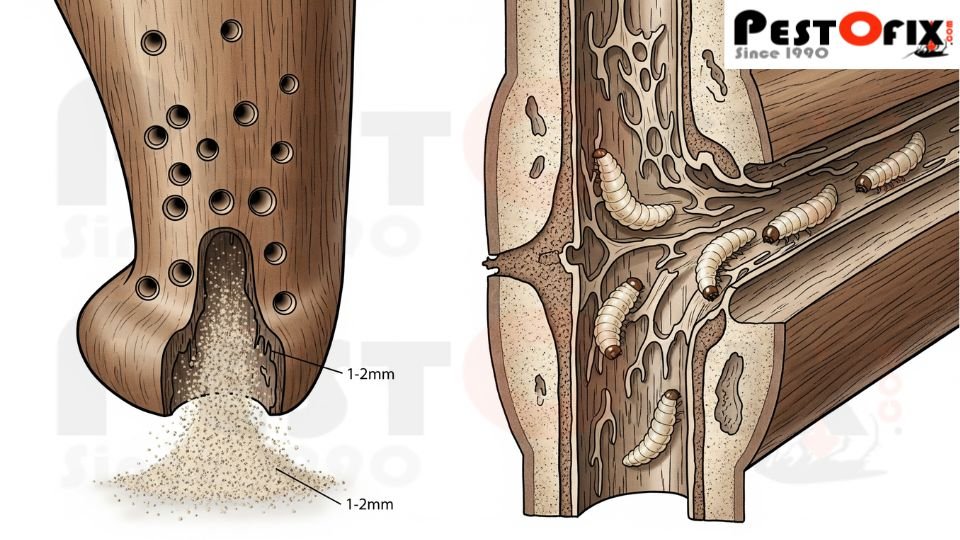
Many homeowners try surface sprays or home remedies when they see powder. Unfortunately, these methods only target adult beetles, not the larvae deep inside the wood.
- The real damage is caused by larvae tunneling for months inside.
- By the time you see powder, infestation may already be 2–3 years old.
- Surface sprays provide short-term relief but never eliminate hidden colonies.
Best Treatment Options for Powder Borer in Furniture
1. Wood Injection Treatment
Technicians inject specialized chemicals directly into exit holes, killing larvae inside the wood.
2. Surface Treatment
Spraying targeted insecticides on affected areas prevents further infestation.
3. Fumigation (For Severe Cases)
In large infestations, controlled fumigation ensures complete eradication of hidden larvae.
Myths About Powder Borer Infestation
Myth 1: “It’s just wood dust, I’ll wipe it away.”
👉 Truth: Fresh powder means active larvae are still inside your furniture.
Myth 2: “It’s definitely termites.”
👉 Truth: Termites do not leave powder. If you see powder, it’s powder borer, not termites.
Myth 3: “One spray will fix it forever.”
👉 Truth: Without proper treatment, infestations continue for years inside wood.
Professional vs DIY – Which Works in 2025?
- DIY: Temporary relief, powder keeps returning.
- Professional Injection & Spray: Kills larvae + prevents recurrence.
- AMC (Annual Maintenance Contracts): Regular check-ups = no chance of reinfestation.
Conclusion: Don’t Ignore the Powder
If you see fine wood powder near furniture, don’t mistake it for termites. Powder borers can silently weaken your beds, cupboards, and doors until they collapse.
The faster you act, the more furniture you can save. While DIY methods may slow them down, only professional treatment ensures long-term protection.