

 Get Estimate
Date: 04-February-2026 | By: Pestofix Commercial Rodent Research Desk
Food handling environments such as restaurants, commercial kitchens, food courts, bakeries, and storage facilities are often cleaned multiple times a day. Despite this, rodent activity remains a recurring challenge across the food industry.
This contradiction exists because rodent presence is not driven by visible cleanliness alone. It is shaped by structural design, operational flow, food handling routines, and the continuous availability of resources that extend beyond surface hygiene.
Rodents Are Attracted by Continuous Food Availability, Not Spills Alone

In commercial food spaces, food is constantly entering, moving, being prepared, stored, and disposed of. This creates a steady cycle of availability that rodents quickly adapt to.
- Frequent opening of storage and prep areas
- Food residue generated during preparation cycles
- Packaging materials retaining food odours
- High turnover of raw and processed ingredients
Rodents respond to consistency and predictability, not just isolated hygiene lapses.
Operational Gaps Occur Outside Cleaning Hours
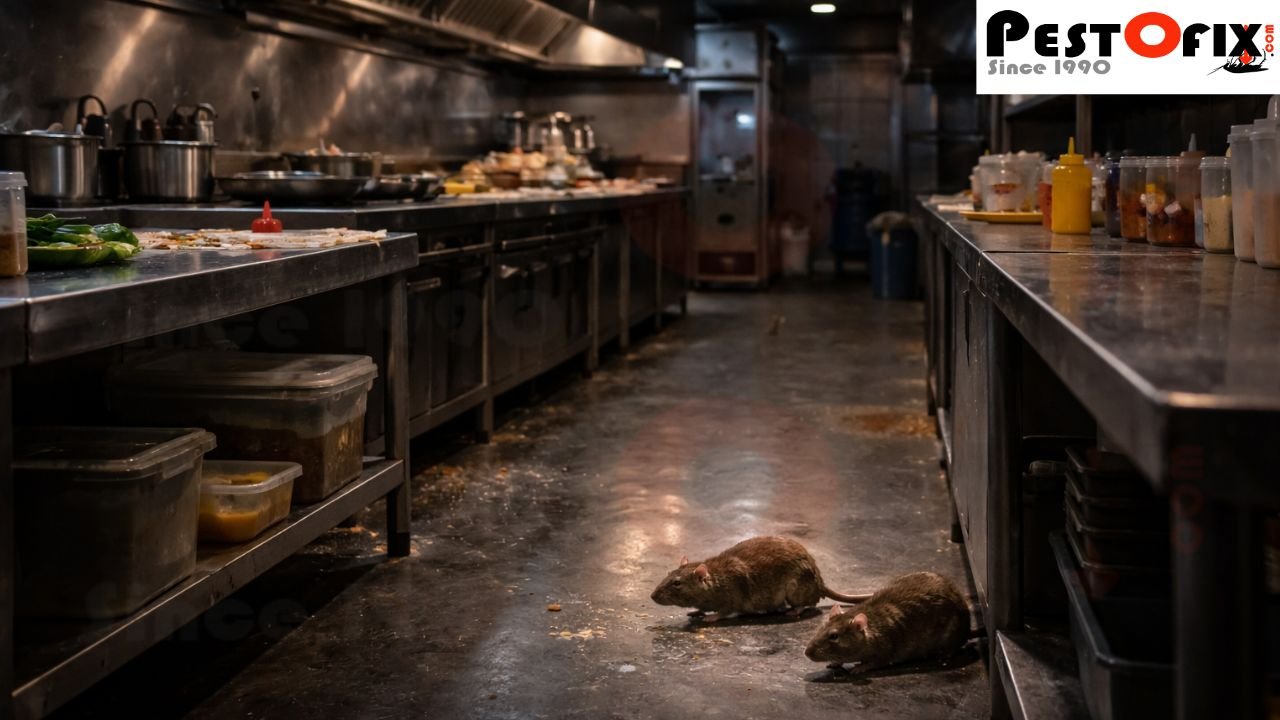
Cleaning schedules are designed around operational hours, but rodent behaviour is largely nocturnal.
- Minimal human presence after closing
- Reduced noise and movement
- Unmonitored storage and prep zones
- Accessible waste and food residue overnight
This timing mismatch allows rodent activity even in facilities with strong daytime hygiene practices.
Structural Design Creates Hidden Access and Shelter
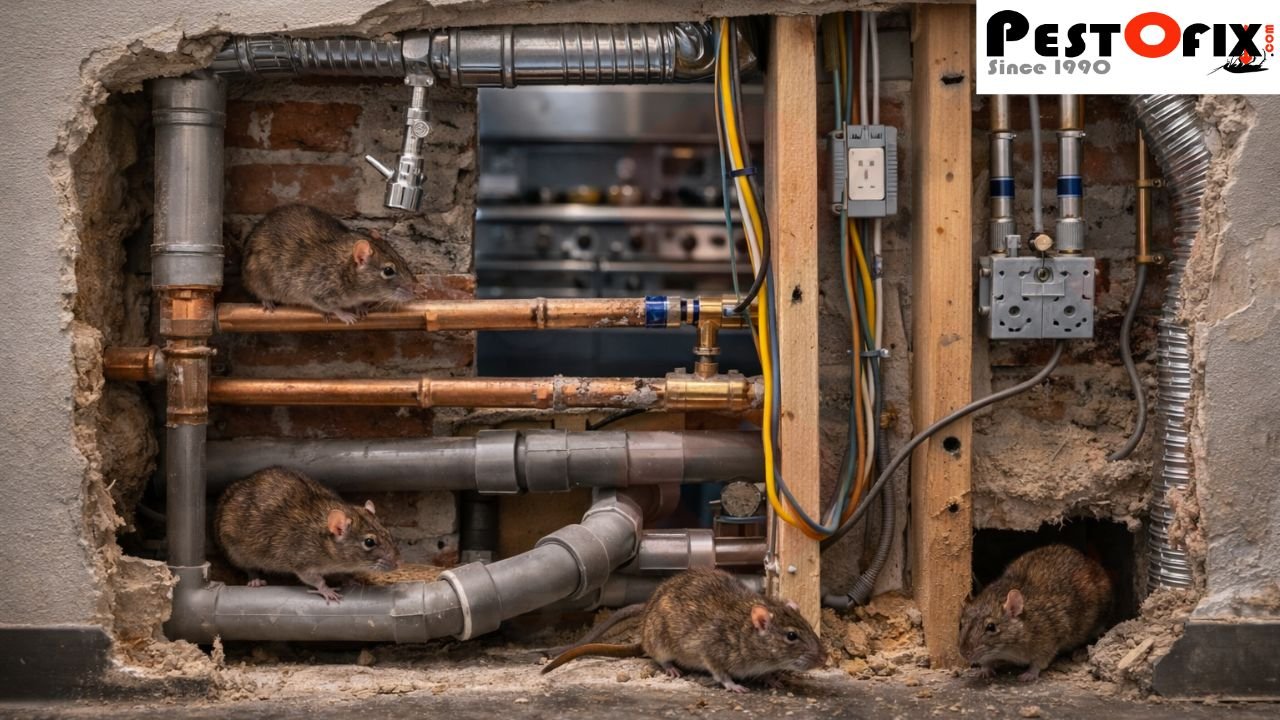
Commercial kitchens and food facilities contain extensive built-in infrastructure designed for efficiency, not pest visibility.
- Gaps behind heavy equipment
- Utility shafts and service ducts
- False ceilings and enclosed storage voids
- Floor and wall junctions beneath fixtures
These zones remain outside daily sanitation routines while staying connected to food activity areas.
Waste Handling Areas Act as Persistent Rodent Anchors
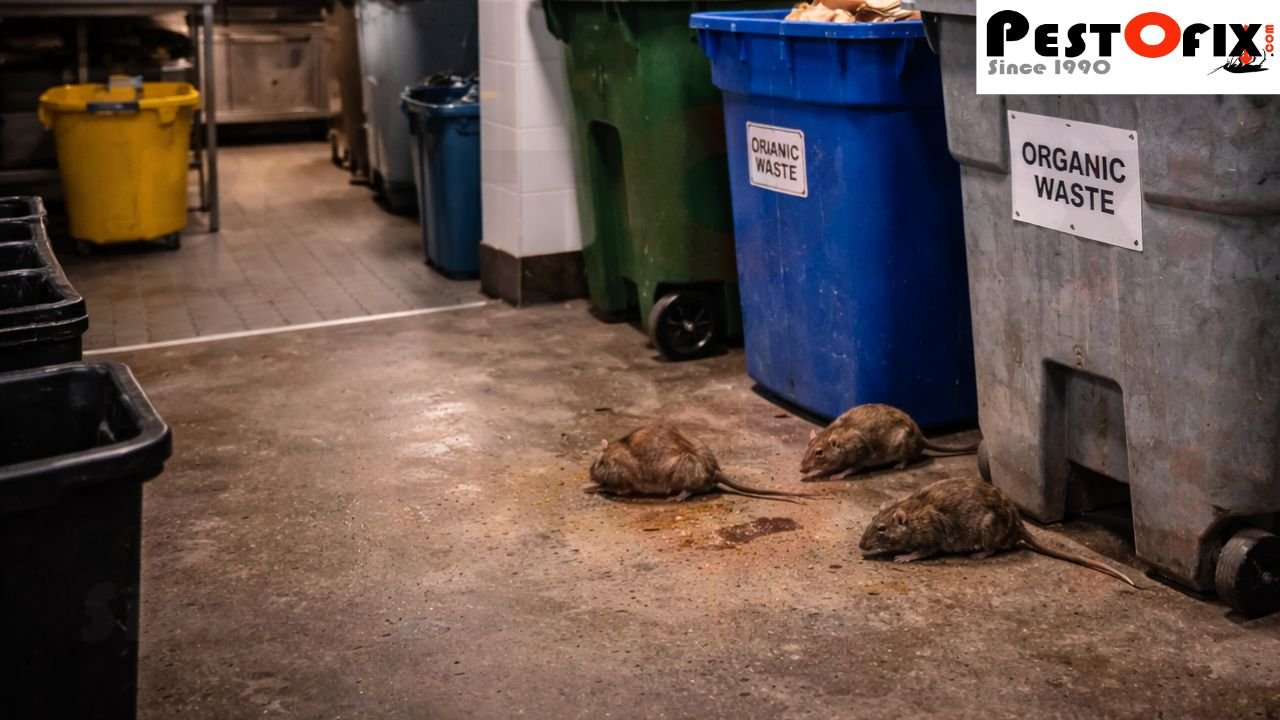
Waste zones are integral to food operations and are accessed repeatedly throughout the day.
- Frequent disposal of food remnants
- Moisture accumulation in waste areas
- Shared access points with kitchens
- High odour concentration
As long as waste flow continues, rodent pressure remains constant.
Why Cleaning Alone Does Not Address Rodent Behaviour
Cleaning removes visible contamination, but rodent activity is influenced by access patterns, shelter availability, and operational consistency.
- Rodents rely on movement routes, not surfaces
- Hidden nesting zones remain unaffected by cleaning
- Food odours persist beyond visible residue
- Activity adapts around routine schedules
This explains why rodent issues persist even in facilities with disciplined sanitation.
Understanding Rodent Behaviour Is Essential for Food Safety Awareness
Food handling environments are dynamic systems. Rodent presence reflects how space, timing, and operational design interact — not simply how clean a facility appears.
Recognising these factors supports better awareness of long-term rodent risk in commercial food operations.