

 Get Estimate
Date: 09-January-2026 | By: Pestofix Rodent Control Specialists
Many homeowners feel relief after catching a rat or mouse using traps. Activity reduces, noises stop temporarily, and it appears that the rodent problem has been solved.
However, in many cases, rat and mice activity returns within weeks. This professional explanation clarifies why traps provide short-term results and why infestations often reappear despite repeated trapping.
Rat and Mice Control Removes Rodents, Not the Conditions Attracting Them
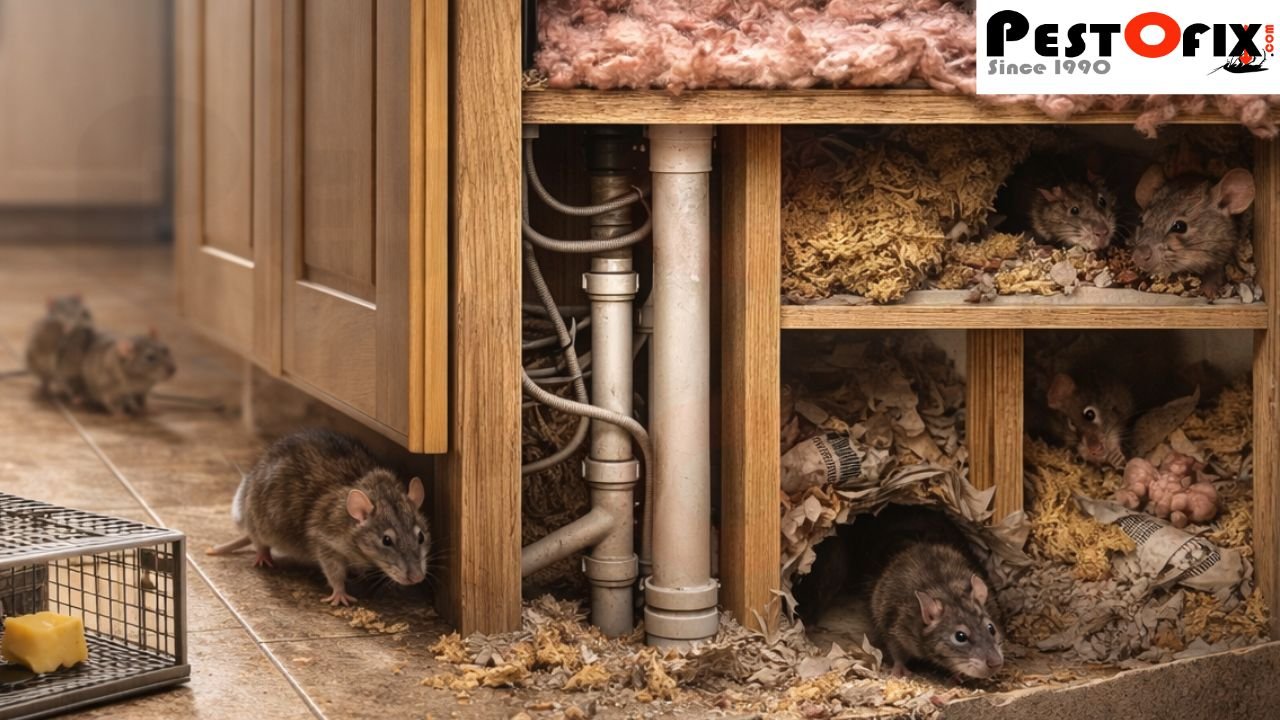
Effective rodent control focuses on environment and structure, not just removal. Traps address visible rodents but leave the habitat untouched.
- Hidden nesting areas remain active
- Structural gaps stay open
- Warmth and shelter persist
- External rodent pressure continues
When these conditions are unchanged, trapping alone cannot provide lasting results.
Rats and Mice Reproduce Faster Than Traps Can Control

Rats and mice reproduce rapidly when shelter and warmth are available.
- Multiple litters per year
- Hidden nests inside walls and ceilings
- Young rodents remain undetected
- Population recovers quickly
This reproduction cycle is a major reason infestations return after trapping.
Rodents Learn to Avoid Traps Over Time

This behavior is known as trap shyness.
- Route changes inside walls
- Avoidance of previously trapped areas
- Learning from other rodents
- Reduced trap success over time
As trap avoidance increases, infestations continue unnoticed.
Hidden Entry Points Keep Reintroducing Rats and Mice

Common rodent entry points include:
- Drainage and sewage lines
- AC and utility pipe gaps
- Wall and foundation cracks
- False ceilings and service shafts
Without sealing these access routes, trapping becomes an endless cycle.
DIY Trapping Focuses on Symptoms, Not Rodent Control Strategy
DIY trapping addresses visible rodent activity but misses deeper infestation causes.
- No inspection of nesting zones
- No structural exclusion
- No population assessment
- No long-term prevention plan
This leads to temporary relief followed by repeated infestations.
Professional Rat and Mice Control Works as a System
Effective rodent control combines inspection, exclusion, targeted removal, and prevention rather than relying on traps alone.
- Targeted rodent control using appropriate treatment methods
- Strategic placement of control measures based on observed activity
- Follow-up monitoring to evaluate treatment effectiveness
When these steps align, rodent recurrence reduces significantly.
Rat and Mice Control Is About Environment, Not Just Elimination
Recurring rodent problems indicate that environmental conditions continue to support rodent survival.
Long-term rat and mice control focuses on removing shelter, blocking access, and making homes unsuitable for rodents.