

 Get Estimate
Date: 20-May-2025 | By: Pestofix Team
If you’ve ever heard mysterious clicking sounds in your walls, or noticed paint bubbling in strange places, there’s a chance you’ve already met the stealthiest destroyer in the insect world: subterranean termites. They don’t make dramatic entrances, they don’t leave obvious trails—and by the time you realize they’re there, the damage is already underway.
Subterranean termites are a menace hiding in plain sight. These underground invaders are responsible for billions of dollars in structural damage every year, yet most homeowners don’t even know they’re at risk. Let’s dig into why these pests are so dangerously efficient at what they do—and how you can stop them before they turn your home into their next buffet.
What Makes Subterranean Termites So Dangerous?
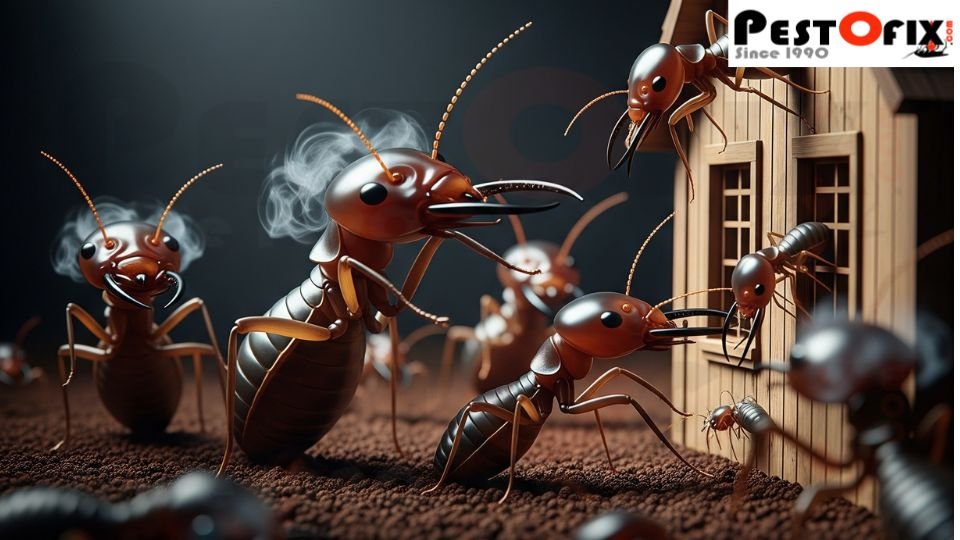
Subterranean termites aren’t your average house pests. These insects form highly organized colonies that can number in the millions. They operate 24/7, chewing through wood, flooring, wallpaper, and even electrical wiring—all in complete silence.
- Invisible attack: They invade from underground, making them hard to detect.
- High reproduction rate: A single queen can lay thousands of eggs per day.
- Round-the-clock feeding: They don’t sleep. Ever.
- Teamwork on another level: Workers forage, soldiers defend, and the queen just keeps making more termites.
How Do Subterranean Termites Enter Homes?
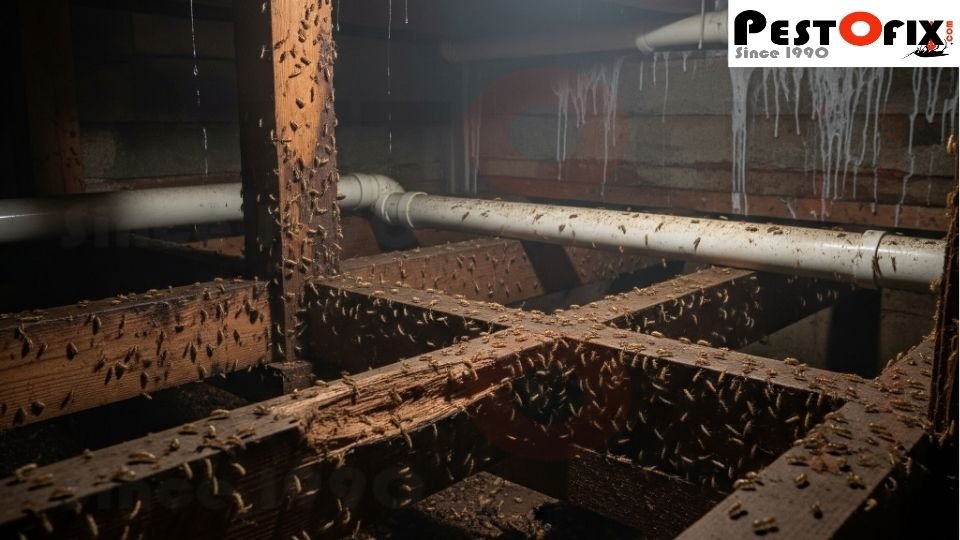
These termites are strategic about infiltration. They build mud tubes—tiny, protected tunnels made of soil, wood, and saliva—that allow them to travel from their underground colonies into your home without exposure to air or predators.
Common entry points include:
- Cracks in the foundation
- Expansion joints and utility lines
- Wooden decks or fences that touch the soil
- Moist crawl spaces or basements
They often exploit weaknesses you didn’t even know existed. If you have wood touching the ground—or worse, wood that’s constantly moist—you’re practically rolling out the red carpet for them.
The Anatomy of a Termite Colony

A subterranean termite colony is like a well-oiled machine. Each member plays a role:
- Workers: Do all the chewing, tunneling, and baby-feeding.
- Soldiers: Protect the colony from ants and other predators.
- Reproductives: Include the king, queen, and future swarmers.
At the center of it all is the queen—an egg-laying machine that can live up to 25 years. She rarely moves, but she doesn’t need to. Her children do all the work while she focuses on growing the colony.
Signs You Might Have an Infestation
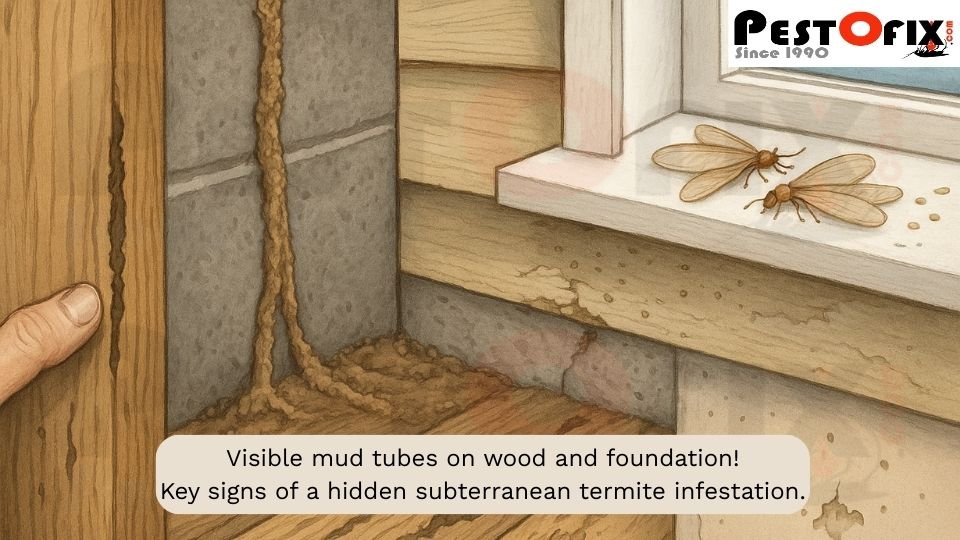
Subterranean termites are experts at going unnoticed. But they do leave subtle signs if you know what to look for:
- Hollow-sounding wood when tapped
- Visible mud tubes on walls or foundation
- Discarded wings near windows or doors (a sign of swarmers)
- Soft or sagging floorboards
- Tiny holes in drywall or bubbling paint
Any of these could indicate a serious infestation below the surface. Early detection is critical, as the longer they go unnoticed, the more damage they do.
Why DIY Methods Usually Fail
It’s tempting to try over-the-counter sprays or “natural remedies” from the internet—but subterranean termites are not so easily fooled. Killing a few workers on the surface doesn’t even scratch the colony. Unless you eliminate the queen and the underground nest, they’ll just keep coming.
Professional treatment usually involves a combination of bait systems, liquid termiticides, and soil barriers. More advanced setups use monitoring stations to detect termite activity before it becomes destructive.
The Bottom Line
Subterranean termites are nature’s demolition crew—small, silent, and relentless. They don’t just nibble around the edges. They can compromise the structural integrity of a home if left unchecked. The good news? With early detection, professional help, and a few smart preventative steps, you can protect your home from becoming their next project.
Don’t wait until you see the damage. By then, it’s already too late. Stay one step ahead of these hidden invaders—because when it comes to termites, what you can’t see can absolutely hurt you.