

 Get Estimate
Date: 19-December-2025 | By: Pestofix Termite Control Experts
Many homeowners believe termite problems can be solved with a single action — a quick fix, a surface application, or even a one-time professional visit. This belief is the primary reason termite control failures are so common.
Termites do not behave like visible pests. They operate silently, underground, and inside structures — making termite control a continuous process rather than a one-time response.
Why Termites Cannot Be Eliminated by a Single Action
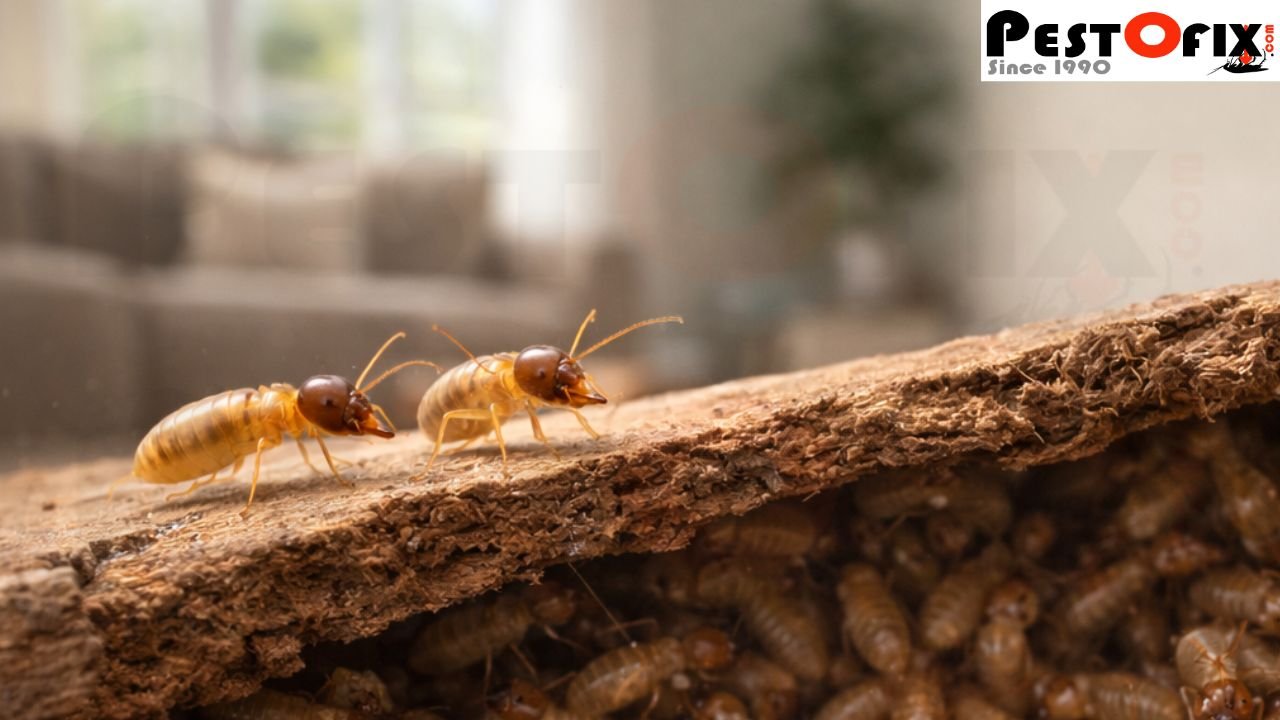
Termites live in organized colonies that function like a self-sustaining system. What you see on the surface represents only a fraction of the actual infestation.
- Colonies operate underground or inside walls
- Workers continuously replace lost members
- Food sources extend across multiple structures
- Activity continues even without visible signs
Because of this structure, eliminating visible activity does not mean termite control has been achieved.
Understanding Termite Behaviour Changes the Control Approach

Termites are not random intruders. They follow moisture, cellulose, and safe pathways created by construction joints, soil contact, and hidden gaps.
- They avoid open exposure
- They rebuild damaged pathways quickly
- They adapt to disturbances silently
- They relocate rather than disappear
This adaptive behavior explains why termite control cannot rely on a single intervention.
Why DIY and Online Termite Tips Create False Confidence

Online termite tips often focus on what is visible and accessible. Unfortunately, termite activity exists mostly where homeowners cannot see or reach.
- Surface actions do not affect hidden colonies
- Temporary silence is mistaken as success
- Colonies continue feeding out of sight
- Damage progresses quietly over time
This is why DIY actions and quick online advice often delay proper termite control rather than solve it.
Why One-Time Termite Treatment Fails in Real Homes
Termite activity does not stop because humans intervene once. Colonies operate independently of short-term disturbances.
- Hidden eggs remain unaffected
- Alternate feeding paths already exist
- Satellite colonies continue activity
- Moisture and wood contact remain unchanged
Without addressing the full lifecycle and movement pattern, termite treatment cannot deliver lasting control.
Why Termite Control Requires Monitoring, Not Assumptions

One of the biggest mistakes homeowners make is assuming silence means success.
- Termites reduce activity when disturbed
- Damage continues internally
- Visible signs appear much later
- Structural weakening goes unnoticed
True termite control depends on observation over time — not one-time conclusions.
Why Delhi NCR Homes Face Persistent Termite Challenges
Homes across Delhi NCR share common termite-friendly conditions — soil contact, concealed piping, wooden fixtures, and moisture retention.
- Independent houses with soil contact foundations
- High-rise buildings with concealed shafts
- False flooring and wooden cabinetry
- Seasonal moisture variations
These regional factors make termite control a long-term responsibility rather than a one-time task.
Termite Control Is a Long-Term Structural Protection Strategy
Termites do not disappear because they were disturbed once. They withdraw, rebuild, and return when conditions allow.
Understanding termite control as a process helps homeowners avoid false confidence, delayed action, and irreversible damage. Awareness, monitoring, and structural understanding form the foundation of effective termite management.