

 Get Estimate
Date: 24-June-2025 | By: Pestofix Team
Termites are not simply pests—they’re biological engineers with astonishing coordination and adaptability. If you're wondering why colonies return again and again, the secret lies in their neurological and behavioral design. Understanding how they think is the first step to defeating them.
At Pestofix, we dive deep into the science of termite behavior—not just surface extermination. This article reveals how termite brains power their empire-building instincts, and why short-term solutions fail to stop them.
Neural Networks That Rival AI? Almost.
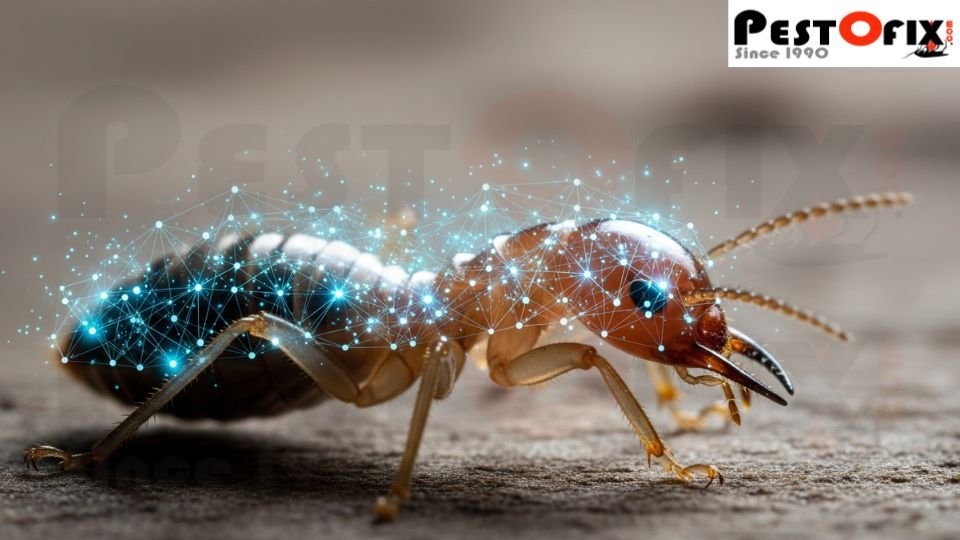
A termite’s brain, though tiny, is wired with a neural pattern capable of decoding chemical cues, coordinating movement, and rebuilding colonies.
- Micro-Brains, Macro Impact: A termite's brain has just 100,000 neurons, yet it controls navigation, construction, and social coordination.
- Signal Interpretation: They don't rely on sight—pheromones, vibrations, and moisture cues drive their decisions in real time.
- Self-Organizing Systems: Termite colonies operate without a central command—each unit adapts instinctively to disruption.
The Monsoon Surge: A Cognitive Trigger

During the monsoon, termites flee their flooded nests and instinctively move toward nearby dry structures—like your home—to rebuild their colonies.
- Humidity Amplifies Signals: Wet environments allow pheromones to linger longer, enabling stronger colony coordination.
- Neurochemical Swarming Instinct: Specific brain chemicals are triggered by rainfall, causing reproductive swarmers to launch flights.
- Environmental Learning: Colonies “remember” hostile zones and build new paths around treated areas within hours.

Communication Without Words: The Silent Intelligence
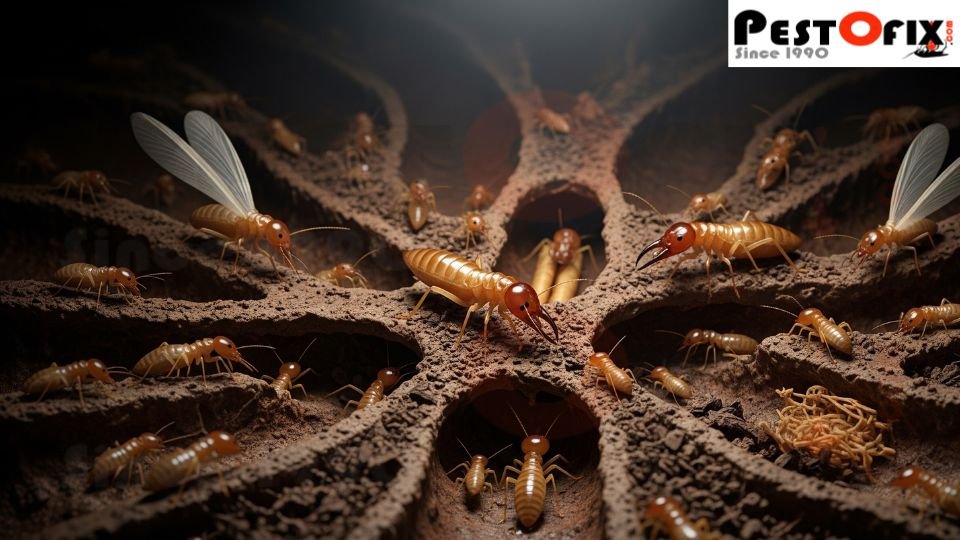
Termites communicate silently through glowing pheromone trails, antenna taps, and vibration pulses—forming a responsive, self-organizing colony.
- Binary Decisions via Pheromones: Pheromone strength and path density determine turn decisions—like biological GPS.
- Construction Commands: When tunnels are damaged, worker termites emit chemical signals that call for repair swarms instantly.
- Warning Pulses: Vibrations through soil warn soldiers and evacuate queens before threats arrive.
Why Quick Fixes Can’t Crack a Termite’s Code
- Treatment Avoidance: Neural responses help termites sense and avoid treated wood, even if it appears dry.
- Colony Cloning: When threatened, part of the colony separates to start a new branch with genetically identical queens.
- Resilience Through Redundancy: Multiple queens, chambers, and tunnels ensure colony survival even after attacks.
How Pestofix Targets the Termite Mind
- Behavioral Interruption Formulas: Our treatments disrupt neural pheromone response chains, stopping coordination from within.
- 360° Neural Shutdown Zones: We treat access points and potential pathways based on colony thought-mapping—not guesswork.
- Reinforced Monitoring Protocols: Post-treatment inspections ensure cognitive disruption persists across seasonal changes.
- Long-Term AMC Programs: Designed to anticipate termite adaptations and prevent re-establishment through scheduled intervention.
Brain-Driven Signs You Shouldn’t Ignore
- Linear mud tubes along walls or tiles—termite highways guided by internal GPS
- Silent wood collapse—caused by months of undetected internal tunneling
- Rhythmic clicking in walls—signaling alert between workers and soldiers
- Sudden appearance of winged insects near light—monsoon-induced swarming
To outwit termites, you must understand them. Surface sprays are no match for their evolving intelligence. Let Pestofix counteract the colony at the neurological level—for real, lasting results.
Related Keywords: termite brain, termite communication, termite intelligence, monsoon termite activity, termite neural behavior, pheromone-based pest control, termite resistance science, termite inspection AMC