

 Get Estimate
Date: 02-February-2026 | By: Pestofix Termite Research Desk
Termite infestations are often associated with old buildings or poor maintenance. However, modern homes are increasingly affected by termites for a different reason — the way contemporary structures are designed and finished.
Modern construction focuses on clean aesthetics, concealed infrastructure, and efficient use of space. While these features improve comfort and appearance, they also reduce visibility into structural areas, allowing termite activity to remain unnoticed for extended periods.
Concealed Structural Elements Reduce Early Warning Signs

Contemporary buildings rely heavily on enclosed frameworks. Structural wood is rarely left exposed, and joints are sealed beneath layers of plaster, paint, and decorative finishes.
- Wooden blocks embedded inside masonry
- Support frames hidden behind wall panels
- No exposed raw material inside living areas
- Limited opportunity for surface inspection
This concealment allows termites to establish activity without disturbing visible surfaces.
False Ceilings and Built-In Interiors Create Undisturbed Zones
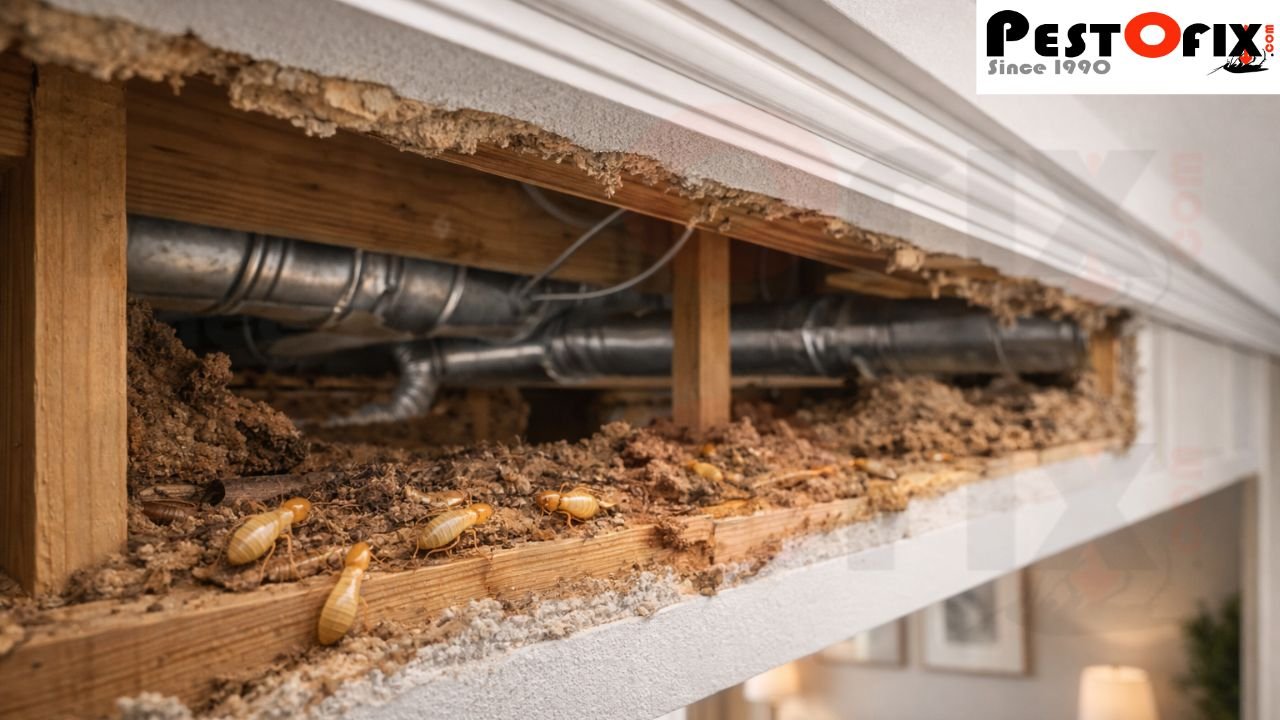
Modern interiors prioritise seamless design. False ceilings, wall-mounted cabinets, and custom furniture reduce visible gaps but increase enclosed spaces.
- Low disturbance from daily household activity
- Stable temperature throughout the year
- Limited airflow and light exposure
- Rare inspection after installation
These areas allow termite colonies to grow without interacting with occupied spaces.
Integrated Utility Networks Connect Hidden Structural Spaces

Modern homes are designed around shared utility systems. These networks run behind walls and beneath floors, connecting kitchens, bathrooms, and storage areas.
- Continuous concealed pathways across rooms
- Moisture-prone zones near plumbing routes
- Limited access for routine observation
- Shared cavities between adjacent units
Such connectivity enables termite activity to expand internally without detection.
Foundation-to-Structure Design Masks Early Entry Points
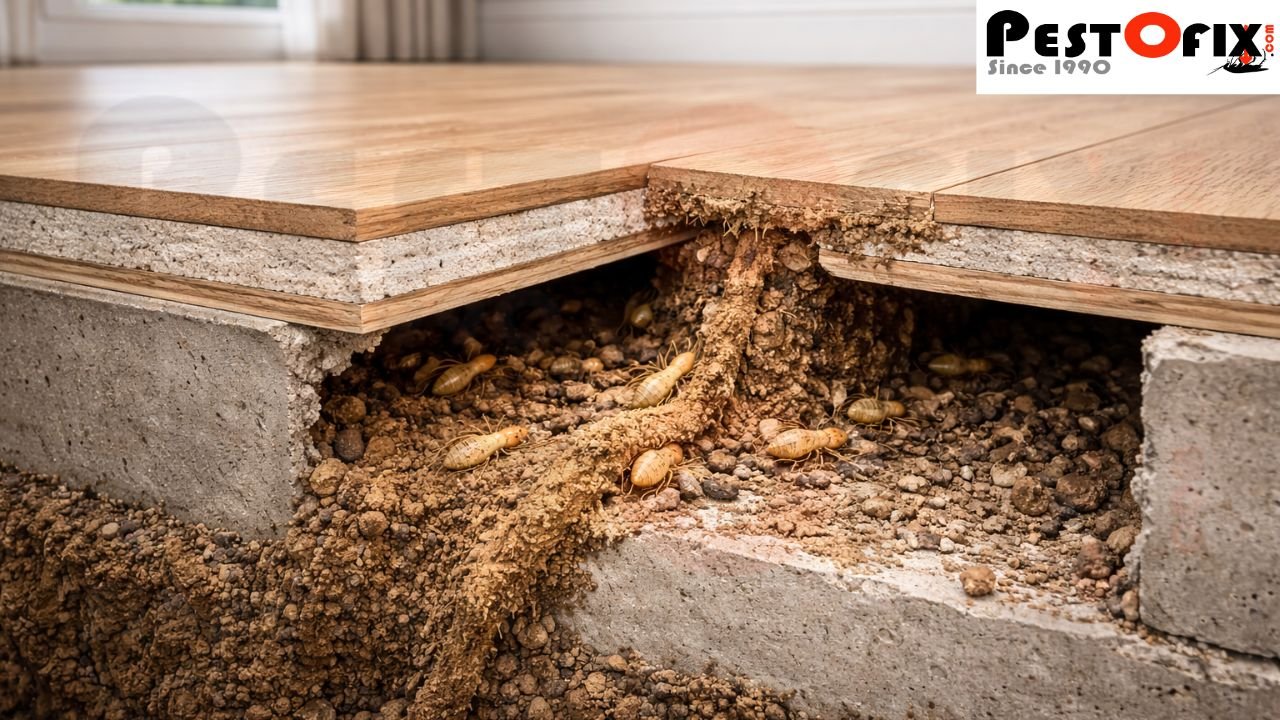
In many modern buildings, flooring layers cover foundation connections completely. Once construction is complete, these zones are rarely revisited.
- Ground contact points hidden under flooring
- Moisture retained beneath surface layers
- No visible transition between soil and structure
- Limited inspection access after handover
Early termite entry often remains unnoticed until activity spreads upward.
Why Termite Activity Is Often Discovered During Renovation
Many homeowners become aware of termite presence only when walls, ceilings, or flooring are opened for renovation or repair work.
- Removal of false ceilings or cabinetry
- Wall openings for electrical or plumbing changes
- Floor replacement or redesign
- Structural modification or reinforcement
Discovery during renovation reflects long-term concealment, not sudden infestation.
Understanding Design Is Key to Long-Term Termite Awareness
Modern construction has changed how homes look and function, but it has also changed how risks remain hidden. Recognising the role of design helps explain why termite activity often goes unnoticed.
Awareness of concealed structural zones, integrated utilities, and limited inspection access is essential for understanding long-term termite risk in modern residential buildings.