

 Get Estimate
Date: 04-November-2025 | By: Pestofix Team
Rats and mice are not just unwanted guests—they’re intelligent survivors that have adapted to live alongside humans. In Delhi, where dense housing, food waste, and old drainage systems create ideal conditions, rodent infestations are among the most common urban pest problems. This blog dives deep into the realities of rat and mouse control in Delhi—how infestations start, what experts really do, and how you can protect your home or business naturally and safely.

At Pestofix, we’ve treated thousands of properties across Delhi NCR—ranging from compact apartments to five-star kitchens. The goal of this guide is simple: to help you understand why rodents thrive in Delhi and how professional, eco-safe pest management can restore hygiene and peace to your environment.
Why Delhi Is a Perfect Habitat for Rats & Mice

Delhi’s rapid urbanization has unintentionally built a paradise for rodents. From Connaught Place’s bustling eateries to the quiet lanes of Lajpat Nagar, the combination of warmth, food availability, and shelter keeps rat and mouse populations active year-round. During monsoon months, rats migrate indoors to escape flooded burrows, which is why infestations spike between July and September.
- Open drains and sewers: Provide perfect travel routes for rats beneath homes and streets.
- Food waste: Restaurants and households produce abundant food scraps, drawing rodents nightly.
- Dense housing: Shared walls and plumbing make it easy for rats to move between buildings.
- Construction zones: Excavation displaces existing colonies, forcing rodents into nearby homes.
Understanding these triggers is the first step. Rodent infestations aren’t random—they’re predictable, and once you know what attracts them, prevention becomes far easier.
How Experts Identify a Rodent Infestation

When our team inspects a property, we’re not just looking for droppings. We analyze behavioral clues and environmental signs that indicate species type and movement. Roof rats (Rattus rattus) often infest higher levels like attics or upper kitchens, while Norway rats (Rattus norvegicus) prefer basements and drainage systems. Each requires a different control strategy.
- Fresh droppings: Black and shiny means active infestation; gray and dry means old.
- Gnaw marks: Rodents chew constantly to control tooth growth—often visible on wires or wooden edges.
- Grease trails: Frequent movement along walls leaves oily rub marks.
- Night noises: Scratching or squeaking in ceilings and walls usually indicates nesting zones.
One of our field specialists once said, “If you see one rat, you’ve likely got five more nearby.” These creatures are social, intelligent, and extremely adaptable—making early detection essential for effective control.
The Pestofix Approach: Safe, Smart & Sustainable Rodent Control

At Pestofix, we view rodent control as both science and strategy. Our team follows a three-step process that ensures long-term results without harming the environment.
- 1. Inspection and Mapping: Identify species, nesting points, and travel routes across the property.
- 2. Targeted Intervention: Use tamper-proof bait stations, traps, and eco-safe repellents to minimize risk.
- 3. Proofing and Prevention: Educate clients to seal entry points, fix drainage gaps for long-term hygiene practices.
We never claim “100% permanent removal” because rodents are part of nature’s balance. Our goal is sustainable management—protecting your property without disturbing the ecosystem. All treatments comply with WHO and Indian safety guidelines.
In 2025, Pestofix introduced smart bait stations in several Delhi restaurants. These are sensor-based traps that send activity data, allowing precise follow-up visits instead of random scheduling—a true blend of technology and pest science.
Common Mistakes People Make When Dealing with Rats & Mice
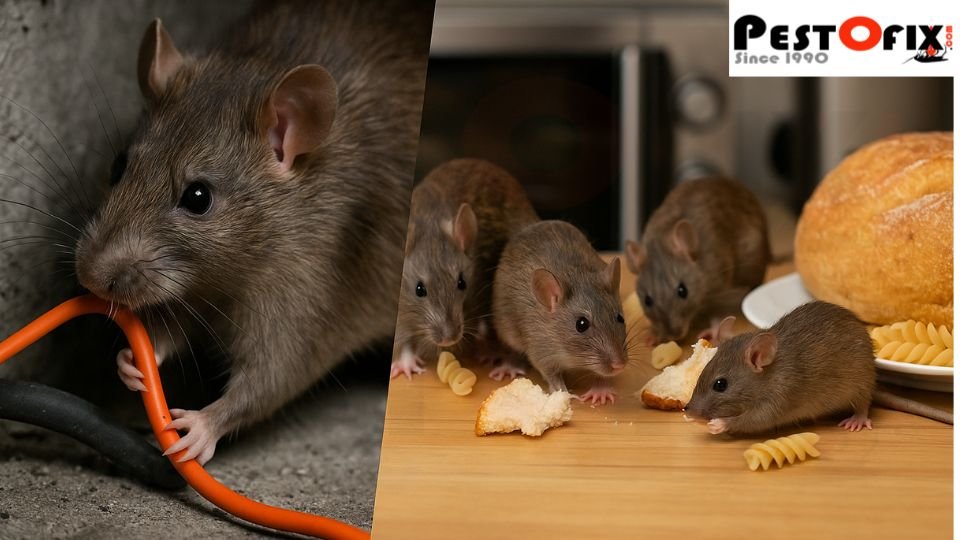
Many homeowners and even small businesses try to solve rodent problems with store-bought traps or random poison pellets. Unfortunately, these DIY approaches can make things worse:
- Using strong-smelling baits: Rats are neophobic—they avoid new or suspicious scents.
- Ignoring entry points: Killing a few rats without sealing gaps just invites new ones.
- Unsafe poison placement: Open bait risks accidental ingestion by pets or children.
- Skipping follow-ups: Even a few survivors can rebuild a colony within a month.
Professionals focus on behavior, not brute force. That’s why Pestofix’s methods rely on inspection and prevention rather than just extermination. It’s not about killing; it’s about control through understanding.
Seasonal Insight: Why Monsoon Means More Rats
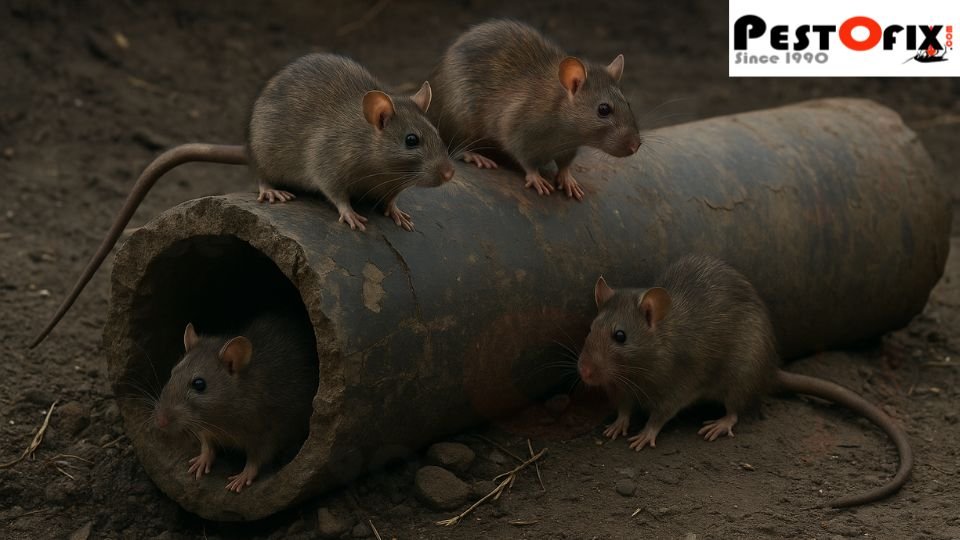
Every monsoon, our hotline activity jumps by 40%. Flooded drains and garbage buildup push rats indoors seeking warmth and dry shelter. That’s why Pestofix offers pre-monsoon inspection services—detecting weak points before they become entry points.
We recommend that both homeowners and commercial kitchens conduct a professional rodent check-up between May and June each year. Prevention is cheaper, safer, and easier than emergency cleanup.
For Homeowners: Everyday Prevention Tips
- Seal all gaps: Use steel mesh or cement to close openings larger than 6 mm.
- Keep food sealed: Store grains, pet food, and snacks in airtight containers.
- Dispose waste nightly: Overflowing bins attract rodents faster than anything else.
- Declutter storage: Avoid cardboard piles and cluttered corners that provide nesting comfort.
Home prevention is about consistency. Even the smallest lapses—like leaving pet food out—can undo weeks of good habits.
For Businesses: Hygiene Is Brand Protection
For Delhi’s restaurants, hotels, and warehouses, rodent control is not optional—it’s a hygiene mandate. Beyond health inspections, one sighting of a rat can damage a brand’s reputation permanently. Pestofix’s commercial rodent programs include:
- Scheduled night-time treatments to avoid customer exposure
- Documentation support for HACCP and local health compliance
- Eco-safe rodent repellents suitable for food environments
- Regular audits with detailed service reports
Cleanliness and credibility go hand-in-hand. A professional maintenance plan is the most cost-effective insurance your business can have.
Rodent Control Cost in Delhi: Factors You Should Know
We don’t list flat prices because every site is unique. Instead, our inspection-based approach ensures you only pay for what’s necessary. Key cost factors include:
- Size & layout: Larger or multi-floor buildings need more bait stations and inspection time.
- Severity of infestation: Light infestations may require minimal treatment, heavy ones need phased programs.
- Access points: Drain or duct sealing increases labor but prevents reinfestation.
- Follow-up frequency: Regular visits keep control sustainable and predictable.
We believe in transparent service and honest communication—no hidden costs, no unnecessary chemicals. Just effective, ethical pest control.