

 Get Estimate
Date: 16-May-2025 | By: Pestofix Team
Rain Brings Life — and Termites
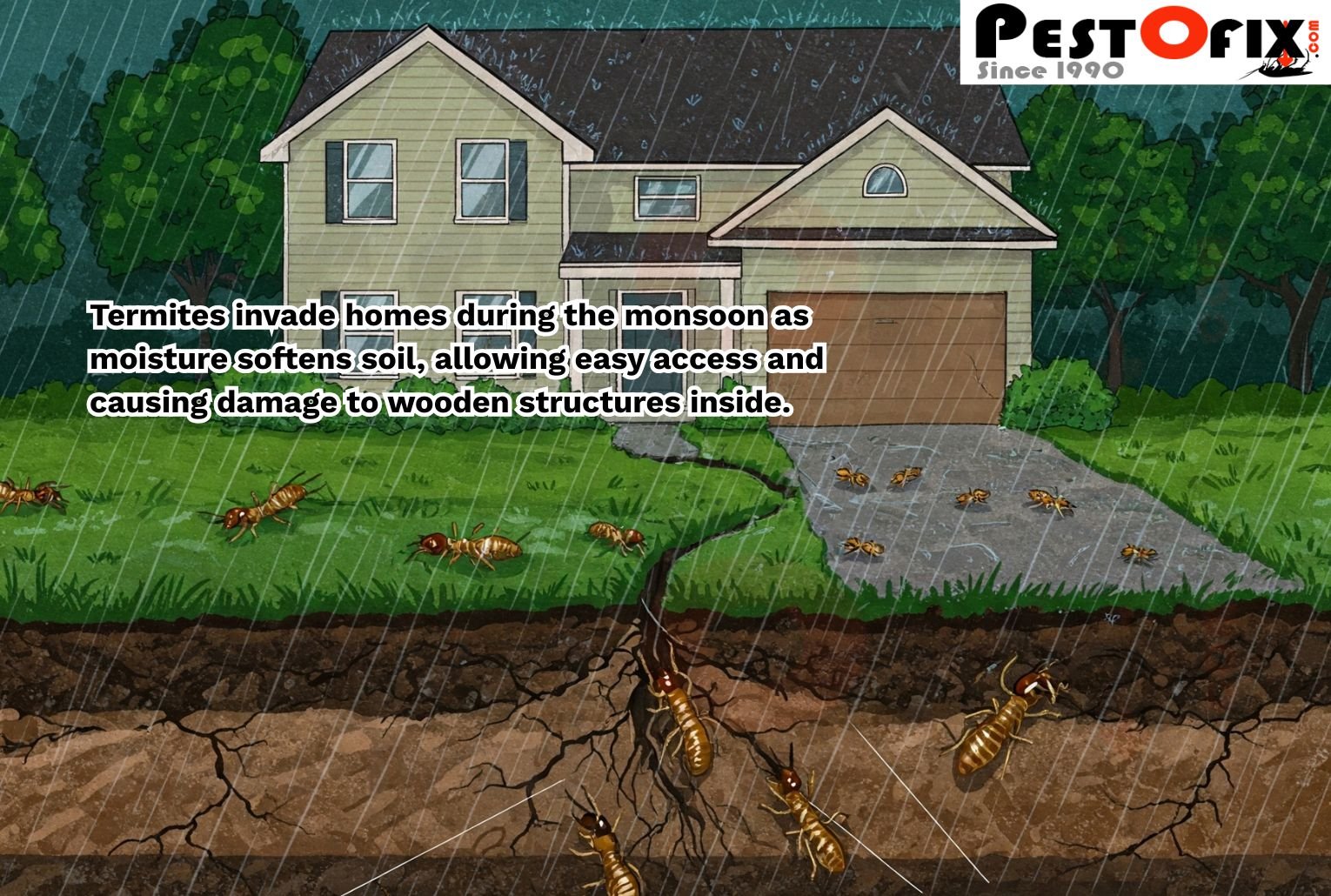
There’s something refreshing about the monsoon — the smell of wet soil, the cooler air, and that sense of calm. But while you're enjoying a cup of chai by the window, something far less relaxing is happening beneath your floors and behind your walls. Termites are getting busy — really busy.
The rainy season is prime time for termite activity, especially in regions like Delhi, Gurugram, Noida, Faridabad, and the rest of NCR. If you've ever wondered why your furniture starts to show signs of damage after a wet spell, you're not imagining things. Monsoon creates the perfect storm for termite infestations.
Why Termites Love the Monsoon
Termites thrive in moist environments. The increase in humidity during monsoon acts like a red carpet rolled out for them. Here's why:
- Moist soil: Soft, damp ground is easier for termites to tunnel through, especially the subterranean kind.
- Increased wood dampness: Wooden doors, cupboards, and flooring absorb moisture, making them more vulnerable.
- Reduced visibility: With constant rains, homeowners are less likely to spot early signs like mud tubes or frass (termite droppings).
All of this makes the rainy season the ultimate breeding and feeding ground for termites — and your home is their buffet.
Why DIY Treatments Fail Miserably During Monsoon
We get it. Sprays, boric powder, or online “termite hacks” seem tempting. But here's the harsh truth: they’re about as effective as putting a Band-Aid on a broken pipe.
- Surface treatments don’t reach termite colonies hiding deep underground or inside your walls.
- Home remedies don’t contain the chemical strength to eliminate termite queens — the real threat.
- DIY methods often push termites to shift colonies deeper, making them even harder to detect later.
During monsoon, termites spread rapidly. You need more than a quick fix — you need a battle plan.
One-Time Spot Treatments? Here’s Why They Backfire
Even some professional pest control providers offer spot treatments — applying gel or spray to specific infested areas. It might look like the problem is gone, but the core issue remains.
Think of termites like an iceberg. What you see is only 10% — the real damage is hidden below the surface. A single treatment might kill a few workers, but not the queen or the colony network that keeps expanding through your walls and soil.
Common Entry Points You Might Be Ignoring
Termites don’t need a welcome mat. They find ways in — silently and steadily. During monsoon, these are their favorite entry points:
- Cracks in walls or foundation near water pipes
- Wooden window and door frames absorbing moisture
- Leaky basements or storage areas with high humidity
- Unsealed gaps near electrical conduits or flooring
Unless you do a full inspection — inside and outside your property — you won’t even know they’re there. Until it’s too late.
Protecting Your Home the Right Way
So what’s the solution? Comprehensive termite control done by trained professionals who know exactly how to deal with monsoon infestations. Here's what a real treatment plan looks like:
- Soil treatment: Creating a chemical barrier around your home’s foundation to prevent entry.
- Drilling & Injecting: Targeted treatment inside walls, floors, and wooden structures.
- Baiting systems: Designed to attract and kill entire colonies, including the queen.
- Annual maintenance: Regular inspections and re-treatments to ensure your home stays termite year-round.
This level of thoroughness just can’t be achieved with a spray can or gel tube.
Final Thoughts: Don’t Wait for the Damage to Show
Termites don’t make noise. They don’t bite. They don’t scare you like cockroaches do. But they’ll silently eat through your home — one rainy day at a time.
If you live anywhere in Delhi NCR, the monsoon isn’t just about umbrellas and muddy roads — it’s also a ticking time bomb for termite infestation. Don’t rely on temporary fixes or "wait and see" approaches. The best time to act is before the damage is visible.
Call the professionals. Protect your investment. And enjoy the monsoon with peace of mind.