

 Get Estimate
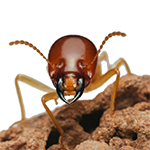
Silent Destroyers
Unveiling Termite Types
Types of Termites
Subterranean Termites
These termites live in underground colonies and build mud tubes to travel between their colony and food sources.
Subterranean termites, scientifically classified under the family Rhinotermitidae, are the most common and destructive type of termites worldwide. They live in colonies that can contain up to two million members, predominantly residing underground in elaborate tunnel systems and chambers. These termites play an essential role in the decomposition of wood and other cellulose-based materials, contributing to the natural ecosystem. However, their affinity for wood can pose significant threats to human-made structures.
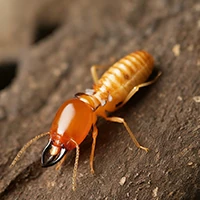
Appearance:
- Workers: These are the most numerous members of the colony. They are small, cream-colored, and blind. Their primary responsibilities include foraging for food, constructing and maintaining the nest, and caring for the young.
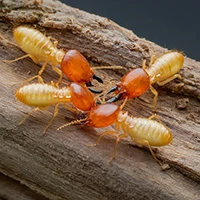
- Soldiers: These termites have larger heads and powerful mandibles for defending the colony against predators. Their bodies are usually cream-colored, and they are also blind.
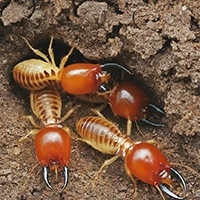
- Reproductives: these are winged termites, also known as alates, responsible for reproduction and establishing new colonies. They are dark brown or black and are the only caste with functional eyes.
- Habitat and Behavior: Subterranean termites thrive in warm, humid environments. They construct intricate underground tunnels, often extending to food sources above ground. These tunnels are made of soil and termite saliva, providing protection from predators and maintaining a suitable microclimate for the colony. Termites feed on cellulose, a primary component of wood, which they access by building mud tubes that connect the underground colony to wooden structures.
- Life Cycle: The life cycle of subterranean termites involves a complete metamorphosis, with four distinct stages: egg, larva, nymph, and adult. The queen lays eggs that hatch into larvae, which then molt several times as they grow into nymphs. Nymphs eventually develop into either workers, soldiers, or reproductives, depending on the colony's needs.
- Threats to Structures: Subterranean termites pose a significant threat to homes and other wooden structures due to their voracious appetite for cellulose. Their feeding activity can weaken the structural integrity of buildings, leading to costly repairs or even collapse if left unchecked. Additionally, their tunneling behavior can damage insulation and electrical wiring, increasing the risk of fire hazards.

Drywood Termites
These termites live in dry wood and do not need contact with the soil. They often infest furniture, wood framing, and other wooden structures in homes.
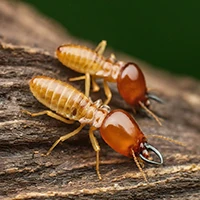
Drywood termites, belonging to the family Kalotermitidae, are a type of termite known for their ability to thrive in dry wood without requiring contact with the soil. Unlike subterranean termites, which build underground nests and tunnels, drywood termites establish their colonies entirely within the wood they infest.
Appearance:
- Workers: These are the most numerous members of the colony, responsible for feeding, grooming, and excavating galleries within the wood. They are wingless, creamy white to light brown in color, and have soft bodies.
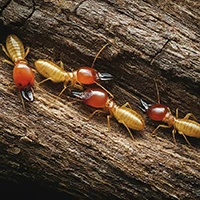
- Soldiers: These termites have larger heads and powerful mandibles for defending the colony against intruders. They are also wingless, but their heads are darker and more hardened than the workers.
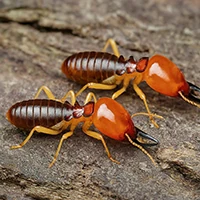
- Reproductives (Alates): These are winged termites, usually dark brown or black, responsible for reproduction and establishing new colonies. They are the only caste with functional eyes.
- Habitat and Behavior: Drywood termites typically infest dry, sound wood in structures like homes, furniture, and dead trees. They are commonly found in warm, coastal regions. These termites create galleries within the wood, consuming it as they go. They are adept at extracting moisture from the wood they consume, enabling them to survive without direct access to water sources.
- Life Cycle: Drywood termites undergo incomplete metamorphosis, with three main stages: egg, nymph, and adult. The queen lays eggs within the wood, which hatch into nymphs. Nymphs molt several times, growing and developing into either workers, soldiers, or reproductives. The entire life cycle can take several years to complete.
Dampwood Termites
These termites live in damp or decaying wood. They are not as common as subterranean or drywood termites but can still cause significant damage to homes.
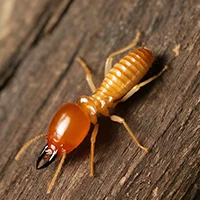
Dampwood termites, belonging to the family Termopsidae, are a type of termite known for their preference for damp or decaying wood with high moisture content. Unlike subterranean or drywood termites, dampwood termites do not require contact with the soil and are typically found in areas with significant moisture, such as decaying logs, stumps, or wood in contact with the ground.
Appearance:
- Workers: These are the most numerous members of the colony, responsible for feeding and excavating galleries within the damp wood. They are wingless, creamy white to light brown, and have soft bodies.
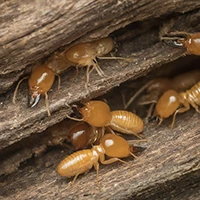
- Soldiers: These termites have larger heads and powerful mandibles for defending the colony. They are also wingless, but their heads are typically darker and more hardened than the workers.
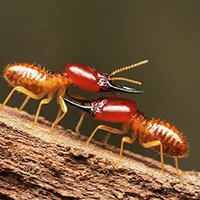
- Reproductives (Alates): These are winged termites, dark brown to black, responsible for reproduction and establishing new colonies. They are the only caste with functional eyes.
- Habitat and Behavior: Dampwood termites primarily infest wood with high moisture content, often caused by leaks, poor ventilation, or wood in contact with the ground. They are commonly found in coastal regions and areas with high humidity. These termites create galleries within the damp wood, consuming it for sustenance. Unlike subterranean termites, they do not build mud tubes but instead seal the entrance to their galleries with fecal pellets to maintain humidity.
- Life Cycle: Dampwood termites undergo incomplete metamorphosis, with three main stages: egg, nymph, and adult. The queen lays eggs within the damp wood, which hatch into nymphs. Nymphs molt several times, developing into either workers, soldiers, or reproductives. The entire life cycle can take several years to complete, depending on environmental conditions.
Signs of Infestation:
Detecting dampwood termites can be challenging as they remain concealed within the wood. However, some indicators of infestation include:
- Damaged Wood: Dampwood termites create galleries within the wood, resulting in a hollowed-out appearance and weakened structural integrity.
- Frass (Fecal Pellets): These termites push their hexagonal fecal pellets out of small holes in the wood, often resembling sawdust.
- Swarmers: Winged reproductives may be seen during swarming season, typically in late summer or fall.
Formosan Termites
These are an invasive species of subterranean termite that is particularly destructive.
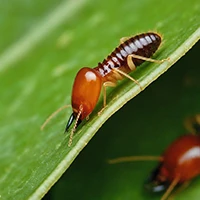
Formosan termites (Coptotermes formosanus) are a highly aggressive and destructive invasive species of subterranean termite originating from East Asia. They have established themselves in various parts of the world, including the United States, and are considered a significant threat to wooden structures due to their large colony size, rapid wood consumption rate, and ability to construct extensive nests.
Appearance:
- Workers: These are the most numerous members of the colony, responsible for foraging, feeding, and nest building. They are creamy-white, wingless, and have soft bodies.
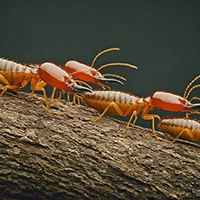
- Soldiers: These termites have larger heads and powerful mandibles for defending the colony. They are also wingless but have darker, more hardened heads compared to workers.
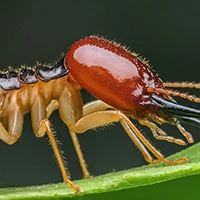
- Reproductives (Alates): These are winged termites, usually yellow-brown in color, responsible for reproduction and establishing new colonies. They are the only caste with functional eyes.
- Habitat and Behavior: Formosan termites are subterranean, living in underground nests that can extend deep into the soil. However, they are unique in their ability to construct secondary nests above ground, often within walls, attics, or other hidden spaces in buildings. These nests, called "carton nests," are made of a mixture of soil, chewed wood, and saliva, and can be incredibly large, sometimes exceeding the size of a basketball.
Formosan termites are voracious eaters, consuming wood at a rapid rate. They are known for their aggressive behavior, attacking a wider variety of wood than other termite species and often causing significant damage in a short period. - Life Cycle: Formosan termites undergo incomplete metamorphosis, with three main stages: egg, nymph, and adult. The queen lays eggs within the nest, which hatch into nymphs. Nymphs molt several times, developing into either workers, soldiers, or reproductives. The entire life cycle can take several months to a year, depending on environmental conditions.
Threats and Damage:
Formosan termites are a significant threat to structures due to their:
- Large colonies: Formosan colonies can contain millions of individuals, leading to rapid wood consumption and extensive damage.
- Aggressive feeding: They consume wood at a faster rate than other termite species and attack a wider range of wood types.
- Ability to build above-ground nests: This allows them to thrive in areas where subterranean termites might not, increasing their destructive potential.
- Secretive nature: Their hidden nests and foraging habits often make them difficult to detect until significant damage has occurred.
Conehead Termites
These are an invasive species of termite native to the Caribbean that were first introduced to the United States in 2001.
Conehead termites are a unique and invasive termite species known for their distinctive appearance and aggressive behavior. Here's a detailed look at these fascinating insects:
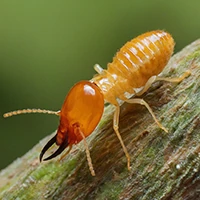
Identification:
- Workers: Have a more typical termite appearance with cream-colored bodies and less distinctive heads.
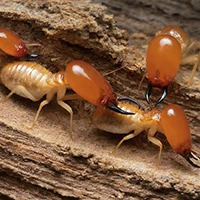
- Soldiers: Easily identifiable by their dark brown, cone-shaped heads. This head shape is the inspiration for their common name. Soldiers are small, measuring about 3-4mm in length, and have cream-colored bodies.
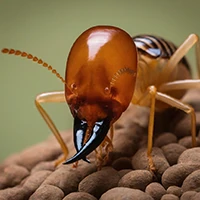
- Nests: Conehead termites build nests both above and below ground. Aboveground nests appear as mounds in grassy areas or on trees and shrubs.
- Origin and Distribution: Originally native to Central and South America, as well as parts of the Caribbean. Introduced to Florida in 2001 and have since spread throughout the southern part of the state.
Behavior:
- Highly aggressive: Conehead termites are known for their aggressive behavior and ability to cause significant damage in a short amount of time.
- Diet: They feed on cellulose, consuming anything from trees and shrubs to wooden furniture and structural lumber.
- Colony composition: A typical conehead termite colony has a high percentage of soldiers (20-30%), which is unusual compared to other termite species.
Threats:
- Property damage: Due to their aggressive nature and voracious appetite for wood, conehead termites pose a significant threat to property. They can quickly cause extensive damage to homes and other structures.
- Environmental impact: These termites can also damage trees and shrubs, harming the natural environment.
DIY Home Remedies to Control Termites!
Some Tips to Control Termites:
- Orange Oil: Apply orange oil directly on the termite infested areas. It contains d-limonene which is lethal to termites.
- Neem Oil: Neem oil can be applied to the infested area. It disrupts the termites' life cycle and eventually kills them.
- Vinegar and Lemon Juice: Mix equal parts vinegar and lemon juice, then spray on infested areas.
- Borax: Mix borax powder with water and spray on infested wood.
- Salt: Mix salt with warm water and inject into termite holes.
- Cardboard Trap: Wet cardboard and place it near the infestation. Termites will be attracted to it, and you can then burn the cardboard.
- Nematodes: Use beneficial nematodes which are natural predators of termites.
- Aloe Vera Gel: Apply aloe vera gel to termite-infested areas.
- Clove Oil: Mix clove oil with water and spray it on termite nests.
- Soap Water: Spray a mixture of liquid soap and water on the affected area.
- Sunlight: Expose infested furniture to direct sunlight.
- Cayenne Pepper: Apply cayenne pepper directly to the infested areas.
- Garlic Oil: Mix garlic oil with water and spray on the infestation.
- Petroleum Jelly: Apply petroleum jelly to wooden furniture to prevent termites.
- Essential Oils: Use essential oils like tea tree, lavender, or eucalyptus by mixing them with water and spraying the affected areas.
- White Vinegar: Spray white vinegar directly on termites.
- Lemon: Squeeze lemon juice and mix with water, then spray on termite-infested areas.
- Vaseline: Rub Vaseline on wooden surfaces to prevent termite attacks.
- Boric Acid: Apply boric acid powder to infested areas.
- Peppermint Oil: Mix peppermint oil with water and spray on termite colonies.
Pestofix Termite Control – The Solution You Need
Don't let Termite take over your home or business. Take the first step towards a Termite environment by contacting Pestofix today. Our friendly and knowledgeable staff will be happy to answer your questions, schedule an inspection, and provide a quote.