

 Get Estimate
Date: 15-October-2025 | By: Pestofix Team
During winter, homeowners often assume that pests disappear along with the cold weather. However, termites remain active and hidden, silently causing damage inside wood, flooring, and furniture. Many people turn to DIY sprays or one-time treatments, only to find that these solutions fail to reach the hidden colonies.
At Pestofix, we see numerous cases every winter where DIY measures result in incomplete control, leading to expensive repairs. Understanding termite behavior in winter and the importance of professional repeated treatments is crucial to prevent long-term structural damage.
Why Termites Remain Active in Winter
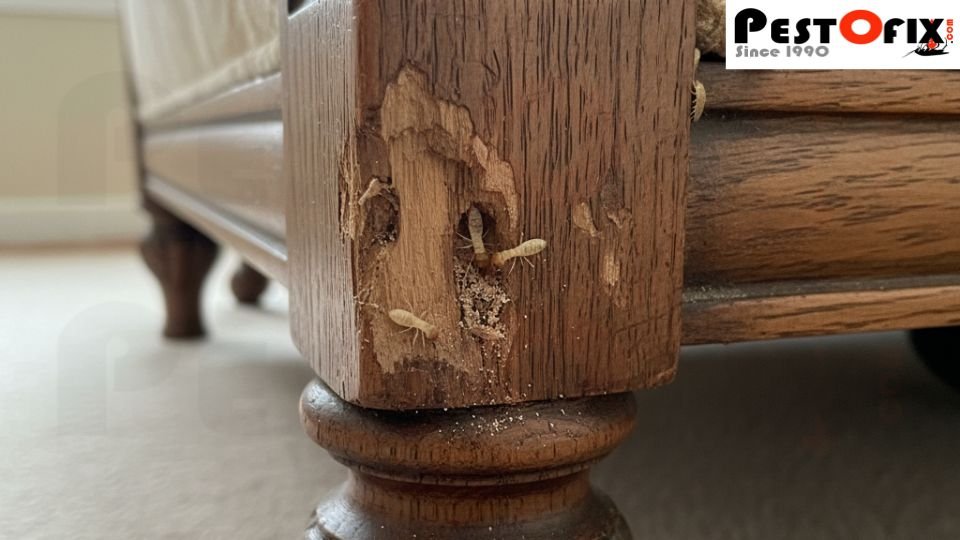
Many people believe that termites die off in the cold. In reality, termites have adaptive strategies to survive harsh winter conditions:
- Subterranean Termites: Retreat to soil layers that remain warm, building mud tubes to reach wooden structures while maintaining moisture.
- Drywood Termites: Hide deep inside wooden beams, furniture, and flooring, continuing to feed and expand galleries.
- Continued Reproduction: Even in winter, termite queens lay eggs at a slower rate, ensuring the colony persists.
- Indoor Survival: Well-insulated homes create favorable conditions for termites, allowing them to thrive unseen.
For example, a family in Noida discovered hollowed wooden flooring despite using multiple DIY sprays. The colony had been protected beneath the boards, illustrating why surface treatments are ineffective.
Why DIY Remedies and One-Time Sprays Fail
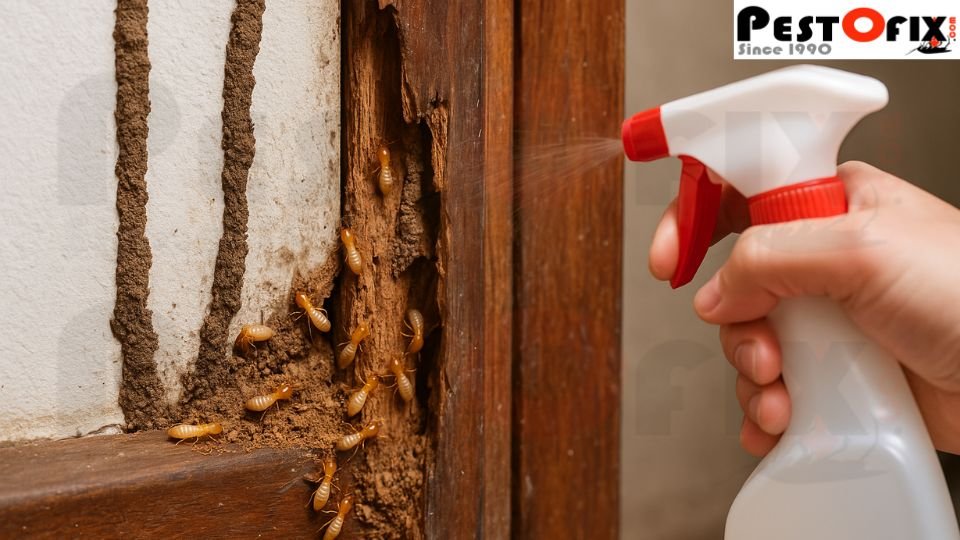
DIY sprays and online remedies may seem convenient but often provide only temporary relief. Their limitations include:
- Failing to reach subterranean tunnels and drywood galleries inside furniture or structural wood.
- One-time treatments do not prevent re-infestation from eggs or nearby colonies.
- Surface sprays give a false sense of security, as visible termites may represent only a fraction of the actual colony.
Winter infestations are particularly tricky because termites are hidden in insulated spaces, making surface treatments ineffective. Homeowners often notice damage only after it has progressed significantly.
How Winter Conditions Affect Termite Behavior
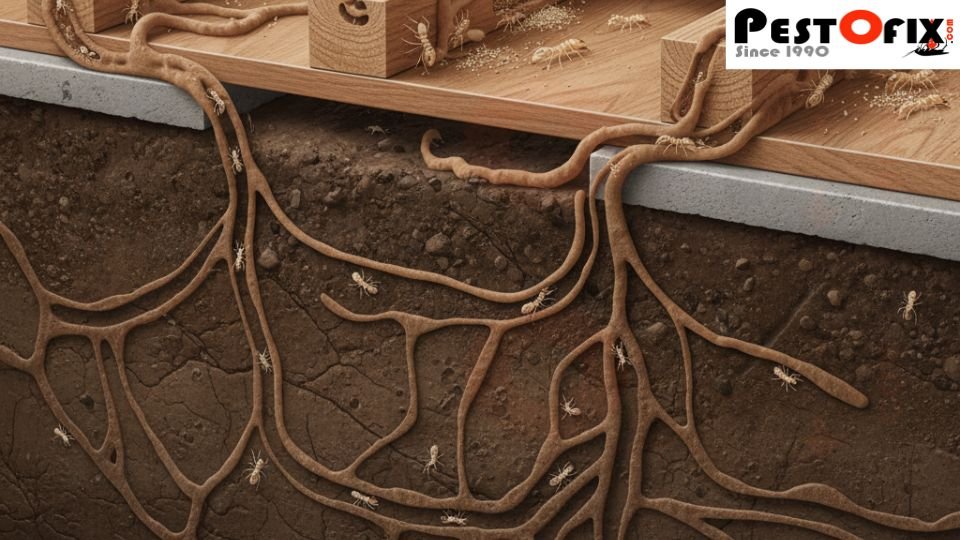
Termites adapt to winter conditions rather than becoming dormant. Their behavior differs by species:
Subterranean Termites
These termites remain active under soil that retains warmth. They construct mud tubes to maintain moisture while feeding on wood. Since these tunnels extend beyond the reach of sprays, only professional soil treatment ensures complete eradication.
Drywood Termites
Drywood termites inhabit wooden furniture and structural beams. They continue feeding, laying eggs, and expanding galleries within the wood. Surface sprays cannot penetrate these tunnels, leaving colonies active throughout winter.
Professional inspection and repeated treatment target both subterranean and drywood colonies, addressing winter’s hidden threats effectively.
Signs of Hidden Winter Termite Damage

Even hidden colonies leave subtle signs. Look for:
- Hollow sounds when tapping wooden floors or furniture.
- Fine sawdust (frass) near wooden structures.
- Small exit holes on surfaces.
- Sagging floorboards or weakened furniture.
Ignoring these signs allows termites to multiply, making eradication more complicated and expensive. Professional inspections during winter can detect damage early and prevent major structural loss.
Why Professional Repeated Treatment Is Essential
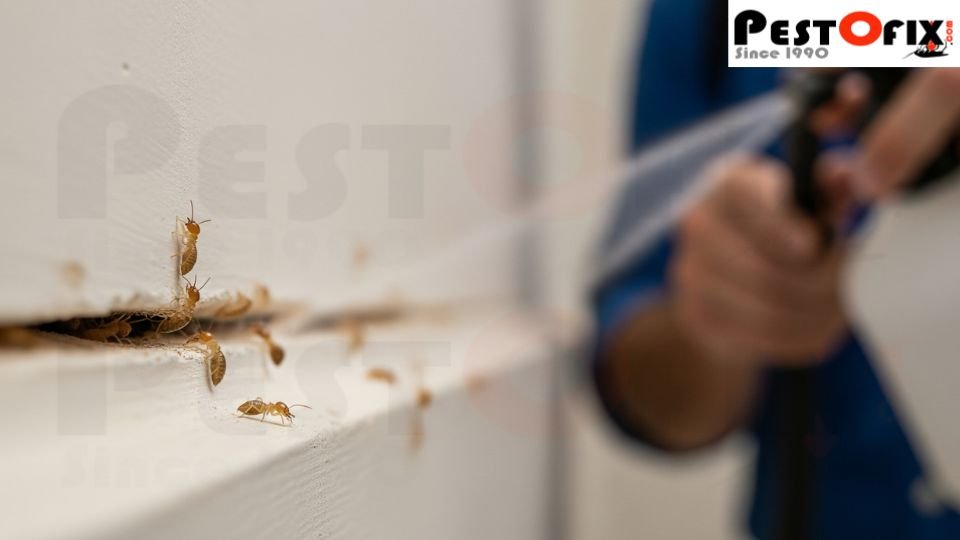
Professional treatment involves:
- Thorough Inspection: Identify hidden colonies, entry points, and moisture-prone areas.
- Comprehensive Treatment: Soil treatment, wood injections, and barrier systems target all active termites.
- Follow-Up Visits: Ensure newly hatched termites from surviving eggs are eliminated.
- Preventive Measures: Seal cracks, control moisture, and provide maintenance advice to reduce future risk.
One-time DIY treatments cannot achieve this level of control. Repeated professional intervention during winter is crucial to safeguard homes and prevent extensive damage.
Preventive Tips to Reduce Winter Termite Risk
Homeowners can take several preventive measures alongside professional treatment:
- Seal cracks, door gaps, and openings around plumbing to block termite entry.
- Fix leaky pipes and remove standing water to reduce moisture zones.
- Keep wooden furniture away from damp floors and walls.
- Regularly inspect wooden structures for frass, hollowing, or pinholes.
- Schedule professional inspections before and during winter for early detection.
- Avoid relying solely on DIY sprays or online remedies; they cannot penetrate hidden colonies.
Combining these preventive steps with repeated professional treatment offers the best defense against winter termite infestations.
Contact Pestofix for Winter Termite Control
Hidden termites can silently destroy wood structures, furniture, and flooring if left untreated. Pestofix provides professional repeated termite treatment tailored for winter conditions, ensuring complete eradication and long-term protection for your home. Early intervention prevents visible damage and costly repairs.