

 Get Estimate
Date: 23-Apr-2025
Ever Wondered Why Your AC Unit Might Be Hiding Roaches?
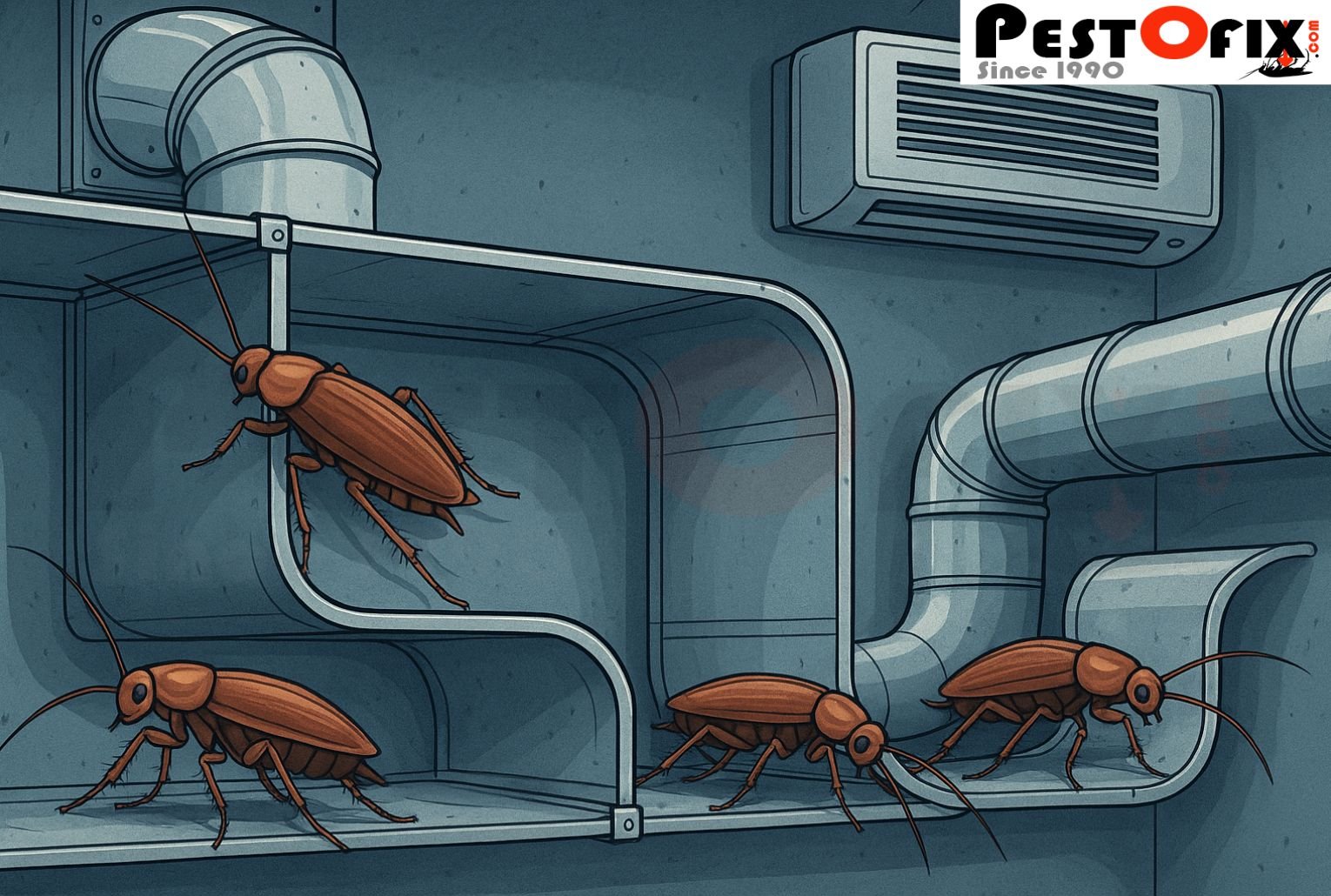
If you've spotted a cockroach near your air conditioner—or worse, had one crawl out of it—you're not alone. As odd as it may seem, air conditioning ducts have become an increasingly common hideout for these sneaky pests. But why do they go there? How do they survive? And more importantly, what can you do to stop them?
Let’s break it down in plain language, so you know exactly how to reclaim your cool, clean air—cockroach.
How Do Cockroaches Get Into AC Systems?
Cockroaches are expert escape artists. They can squeeze into your home through the tiniest cracks and make their way into your AC ducts through:
- Gaps around AC pipes and wall mounts
- Openings in false ceilings connected to ductwork
- Drain holes and moisture channels inside the unit
- Shared HVAC systems in apartment buildings
Once they’re in, they find shelter, water, and sometimes even food—making your AC their new favorite hangout.
Why Do They Thrive Inside AC Ducts?
It’s a myth that cockroaches only love warm, humid environments. In fact, they’re surprisingly adaptable. Your AC unit may feel cool to you, but deep inside, the story is different:
- Warm components like motors and wiring provide heat
- Condensation offers moisture to drink
- Dust and organic matter serve as hidden food sources
- It’s dark and rarely disturbed, perfect for nesting
So yes, even in a climate-controlled system, cockroaches find all the comfort they need.
Signs You Have Roaches in Your AC Ducts
It’s not always obvious, but if you know what to look for, you can catch the problem early:
- A musty or oily smell coming from vents
- Specks or droppings near the air unit or filters
- Unusual clicking or rustling sounds at night
- Roach sightings in or around the indoor AC panel
- Frequent allergy or asthma flare-ups when AC is on
How to Get Rid of Cockroaches in Your AC System
Now that we know they’re in there, what’s the best way to kick them out—and keep them out?
1. Deep Clean the AC Unit
Schedule a professional HVAC cleaning service. They’ll remove built-up dust, debris, and any hidden nests or eggs that may be lurking inside.
2. Seal the Entry Points
Use sealants, mesh screens, or insulation foam to block all openings, especially:
- Pipes leading into walls
- Gaps around the drainage outlet
- Wall mount installation cracks
3. Use Targeted Gel Baits
Avoid spraying harsh chemicals into your AC. Instead, use cockroach gel baits around the unit and nearby surfaces. These are odorless, safe, and highly effective.
4. Fix Moisture Issues
Ensure that your AC’s drainage system is working well and the filters are clean. Roaches love wet areas—cut off their water source.
5. Call a Pest Control Expert
If you want peace of mind, bring in professionals who specialize in pest control for HVAC systems. They'll know how to treat the problem at the root—safely and thoroughly.
What Not to Do
- Don't spray aerosol insecticides directly into vents—they circulate back into your air
- Don’t block vents with tape or cloth—this can damage your AC
- Don’t delay action—an ignored problem can turn into a serious infestation
Final Thoughts: Don't Let Your AC Become a Cockroach Hotel
Your AC is supposed to bring comfort, not creepy crawlers. By understanding how cockroaches sneak in, survive, and thrive inside your air conditioner ducts, you’re already ahead of the game.
With regular maintenance, a few smart prevention strategies, and the help of experienced pest professionals, you can ensure that your cooling system stays cool—and pest.