
Environmental and Seasonal Influence on Cockroach Infestation
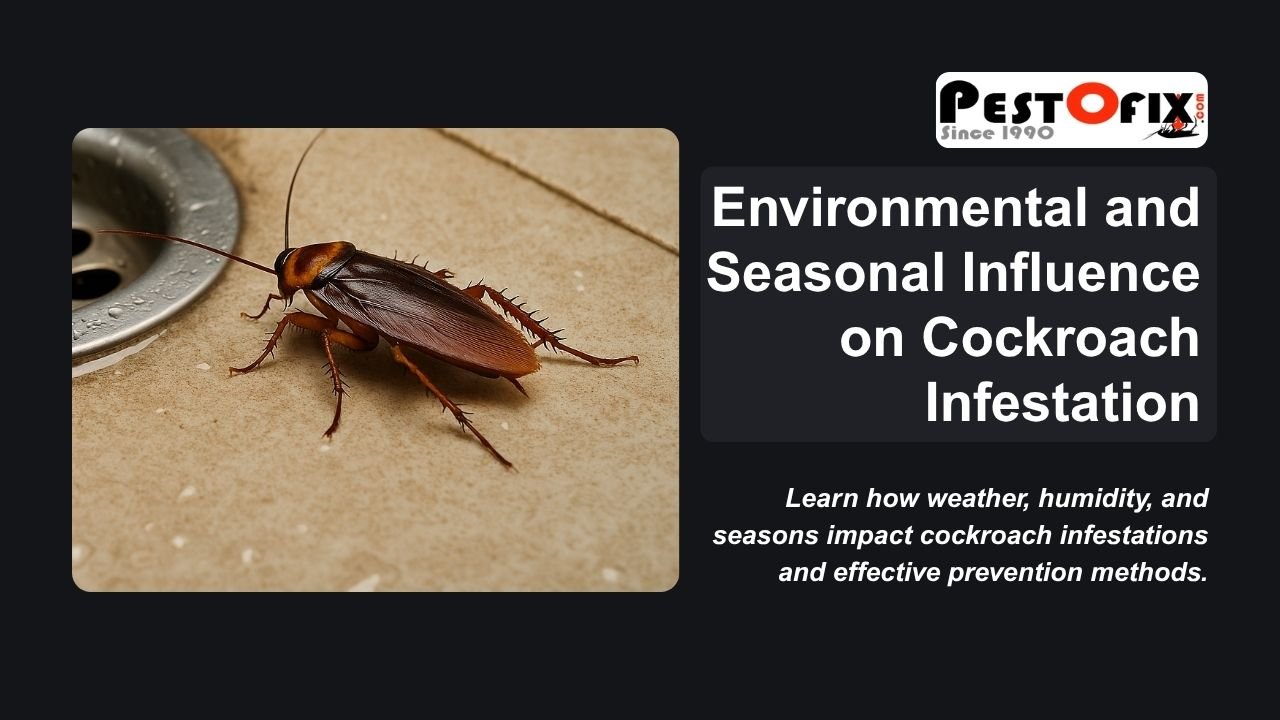
Cockroaches are not merely a nuisance; they are a global public health concern and a testament to evolutionary resilience. Their presence in human dwellings is a complex biological response to specific environmental and seasonal triggers. Moving beyond reactive pest control requires a deep understanding of these triggers. This definitive guide explores the intricate relationship between cockroach biology, climate, and the urban ecosystem, providing a scientific basis for effective, year-round prevention and management strategies.
The Foundational Biology: Why Environment is Everything
To comprehend the "when" and "where" of cockroach infestations, one must first understand the "why" of their biology. Cockroaches are ectotherms (cold-blooded insects), meaning they rely on external environmental heat to regulate their body temperature and metabolic processes. This fundamental trait is the primary driver behind their global distribution and seasonal behavior. Their survival and prolific breeding are directly tied to a narrow set of conditions, making certain environments and times of year exponentially more favorable.
The Goldilocks Zone: Temperature and Humidity
Every cockroach species has an optimal range of temperature and humidity where it thrives, reproduces rapidly, and poses the greatest infestation risk. For the most common domestic pests—the German cockroach (Blattella germanica) and the American cockroach (Periplaneta americana)—this "sweet spot" lies between 25°C and 33°C (77°F to 91°F) with relative humidity levels consistently above 70%.
- Metabolic Acceleration: Within this optimal range, cockroach metabolism peaks. This accelerates their breeding cycles, shortens the gestation period for eggs (oothecae), and drastically reduces the time it takes for nymphs to mature into breeding adults. For example, a German cockroach population can complete a generation in about 100 days at 25°C, but this stretches to over 200 days at cooler temperatures.
- Water Dependency: A cockroach can survive for nearly a month without food but will perish in about a week without water. Their exoskeleton is not perfectly waterproof, and they lose moisture easily. High humidity reduces desiccation (drying out) and is a key indicator of available water sources.
- Cold Threshold: When temperatures consistently drop below 15°C (59°F), cockroach activity and reproduction slow dramatically. Below 10°C (50°F), they enter a state of lethargy, and prolonged exposure to freezing temperatures is fatal, forcing them to seek refuge in warmer microhabitats.
Seasonal Infestation Patterns: A Year-Round Calendar
The changing seasons create a predictable, cyclical pattern of cockroach behavior and population dynamics. Understanding this calendar is crucial for timing preventive measures for maximum effect.
Spring: The Awakening and Initial Surge
As winter's grip loosens, rising temperatures and longer daylight hours signal a change. Spring is a period of renewed activity and the beginning of the population growth phase.
- Emergence from Harborage: Cockroaches that have been relatively dormant in deep wall voids, under appliances, and in sub-floor areas during the winter begin to become more active.
- Accelerated Breeding: With temperatures moving into the low-to-mid 20s Celsius (°C), reproduction rates begin to climb. The first major wave of egg cases (oothecae) are laid in spring.
- Pre-Monsoon Scouting: In many regions, spring is also drier. This can drive cockroaches indoors in search of water, often before the summer population explosion, making it a critical window for inspection.
Summer: The Peak Infestation Season
Summer provides the perfect storm of conditions for cockroaches: consistent warmth, high humidity, and often, increased availability of food and water. This is the season of peak infestation risk.
- Optimal Breeding Conditions: The stable, warm temperatures are ideal for all life stages. The time from egg to adult is at its shortest, allowing populations to grow at an exponential rate.
- Expanded Territory: High populations force cockroaches to expand their territory within a structure. They may also move more freely between the outdoors and indoors through sewer lines and drainage systems.
- Increased Visibility: Due to their high numbers and increased activity, cockroaches are most likely to be seen by homeowners during the summer, often at night.
Monsoon / Rainy Season: The Humidity Boom
In tropical and subtropical climates, the monsoon season presents a unique set of challenges. While heavy rain can flood outdoor nests, the accompanying humidity and moisture issues are a massive boon for cockroaches.
- Explosion of Moisture: Leaky pipes, damp walls, clogged drains, and standing water create a perfect high-humidity environment. American and Oriental cockroaches often invade ground-floor apartments and basements from flooded sewer systems.
- Outdoor-Driven Invasions: Species that live primarily outdoors, like the American cockroach, are driven inside by torrential rains, leading to sudden, noticeable infestations.
- Mold and Decay: The monsoon promotes the growth of mold and decay, which can serve as additional food sources for some cockroach species.
Autumn (Fall): The Inward Migration
As temperatures begin to drop in autumn, cockroaches face a survival imperative: find stable, warm shelter for the winter. This is when preventative exclusion is most critical.
- Seeking Shelter: Cockroaches actively seek entry points into homes and commercial buildings. They are attracted to the warmth emanating from structures.
- Population Consolidation: Outdoor populations move indoors, and indoor populations consolidate into smaller, warmer core areas, often deep within walls or near heat-generating appliances.
Winter: The Hidden Infestation
Winter does not mean cockroaches are gone; it means they have become secretive. Infestations persist but in a cryptic, low-activity state.
- Cryptic Behavior: Activity is confined to warm, safe harborage sites near food and water. They are rarely seen unless their harborage is disturbed.
- Slowed Reproduction: Breeding slows or may even pause entirely in unheated buildings, but in consistently heated homes, a low level of reproduction can continue year-round.
- Centralized Harborage: Cockroaches congregate in microclimates provided by large appliances (refrigerators, ovens), water heaters, boiler rooms, and inside false ceilings.
Urban Environmental Amplifiers
Human civilization has inadvertently engineered the perfect, large-scale habitat for cockroaches. The modern urban landscape provides everything they need to thrive on a massive scale.
The Concrete Jungle: A Cockroach Metropolis
Cities offer a interconnected network of resources that buffer cockroaches from natural population controls.
- High-Density Housing: Apartment and condo complexes are ideal for cockroaches. They can travel between units through walls, plumbing chases, and electrical conduits, making control in a single unit often futile without building-wide cooperation.
- Complex Sanitation Systems: Municipal sewer and drainage systems provide a vast, temperature-stable network for species like the American cockroach. From here, they can access any connected building.
- Commercial Food Establishments: Restaurants, grocery stores, and food processing plants provide limitless food sources. Infestations in these facilities can act as a constant source population, spilling over into adjacent residential areas.
- Structural Heat Islands: The collective heat from buildings, subways, and other infrastructure creates a warmer microclimate than surrounding rural areas, allowing for longer breeding seasons.
Architectural and Maintenance Failures
The very structures we build often contain the blueprints for their own infestation.
- Moisture Intrusion: This is the single biggest attractor. Leaking pipes, faulty grading, poor drainage, clogged gutters, and cracked foundations create the damp conditions cockroaches require.
- Architectural Gaps and Voids: Modern construction is filled with wall voids, drop ceilings, soffits, and utility penetrations. These provide perfect, undisturbed harborage sites that are difficult to inspect and treat.
- Poor Ventilation: Inadequate ventilation in crawl spaces, basements, attics, and bathrooms leads to elevated humidity levels, creating ideal environments.
Proactive, Seasonally-Timed Prevention and Control Strategies
Effective cockroach management is not about a single treatment; it is a continuous, strategic process aligned with the seasons and focused on making the environment inhospitable.
Spring: The Season of Inspection and Exclusion
Goal: Stop the surge before it begins.
- Conduct a Thorough Inspection: Use a flashlight to inspect all dark, warm, and humid areas: under sinks, behind appliances, in cabinets, and in basements. Look for live insects, droppings (which look like coffee grounds or black pepper), shed skins, and egg cases.
- Seal Entry Points: Use a quality silicone-based caulk or copper mesh to seal cracks and crevices around pipes, baseboards, windows, and doors. Pay special attention to areas where utilities enter the home.
- Clean and Declutter: Reduce potential harborage sites by decluttering storage areas, such as basements and garages.
Summer: The Season of Population Suppression
Goal: Break the exponential growth cycle.
- Implement Targeted Baits: Summer is the most effective time for gel baits. Cockroaches are actively foraging, and the bait is transferred through the population via trophallaxis (food sharing) and coprophagy (consumption of feces). Place baits near harborage areas, not in the middle of open floors.
- Use Insect Growth Regulators (IGRs): IGRs, such as hydroprene or pyriproxyfen, are "birth control" for insects. They disrupt the molting and maturation process, preventing nymphs from becoming adults and rendering eggs non-viable. They are a critical long-term tool.
- Aggressive Sanitation: Be relentless. Store food in airtight containers, clean up crumbs and spills immediately, and take out the trash regularly. Do not leave pet food out overnight.
- Manage Vegetation: Keep shrubs, mulch, and woodpiles away from the foundation of your house to reduce outdoor harborage sites near potential entry points.
Monsoon: The Season of Moisture Warfare
Goal: Eliminate the water advantage.
- Fix Leaks Immediately: A single dripping faucet can support a large population. Check all pipes, faucets, and appliances for leaks.
- Ensure Proper Drainage: Clear gutters and downspouts to direct water away from your foundation. Check that the ground around your home slopes away to prevent pooling.
- Use Dehumidifiers: In chronically damp areas like basements and crawl spaces, run a dehumidifier to keep humidity levels below 60%.
- Inspect and Clear Drains: Ensure all floor drains and sink drains are clear of debris and are functioning properly to prevent backups and overflows.
Autumn: The Season of Fortification
Goal: Seal the fortress before the siege.
- Re-inspect and Re-seal: Conduct another round of exclusion, paying close attention to new gaps that may have formed and areas where utilities enter. Install door sweeps on exterior doors.
- Create a Dry Perimeter: Ensure the exterior of your home is as dry as possible. Fix any leaks in outdoor spigots and ensure sprinklers are not spraying directly onto the house walls.
Winter: The Season of Monitoring and Targeted Action
Goal: Locate and eliminate overwintering populations.
- Use Sticky Traps for Monitoring: Place sticky monitors (glue traps) in key areas like behind the refrigerator, under the sink, and in the basement. They are less for control and more for detecting the presence and location of a hidden infestation.
- Target Harborage Sites: If activity is detected, apply targeted dusts (like boric acid or diatomaceous earth) or baits directly into the voids and areas where cockroaches are hiding. Avoid broadcast spraying, which can scatter them.
- Professional Inspection: Winter is an excellent time for a professional pest control inspection, as they can identify the core harborage sites that are sustaining the population through the cold months.
Conclusion: An Integrated, Knowledge-Based Approach
Cockroach infestations are not a random occurrence but a predictable outcome of environmental conditions. The interplay of temperature, humidity, seasonal cycles, and urban infrastructure creates a clear roadmap of risk. By shifting from a reactive "see-and-spray" mentality to a proactive, integrated pest management (IPM) strategy, homeowners and property managers can achieve lasting control. This approach prioritizes prevention through exclusion and sanitation, uses pesticides as targeted tools rather than blanket solutions, and times interventions to disrupt the cockroach life cycle at its most vulnerable points. Understanding that a cockroach infestation is an environmental problem first and a pest problem second is the key to winning the long-term battle against these formidable insects.
No comments yet — be the first!